The Phonics Screening Check in Year 1: How to prepare pupils (Activities + Tips for 2026)
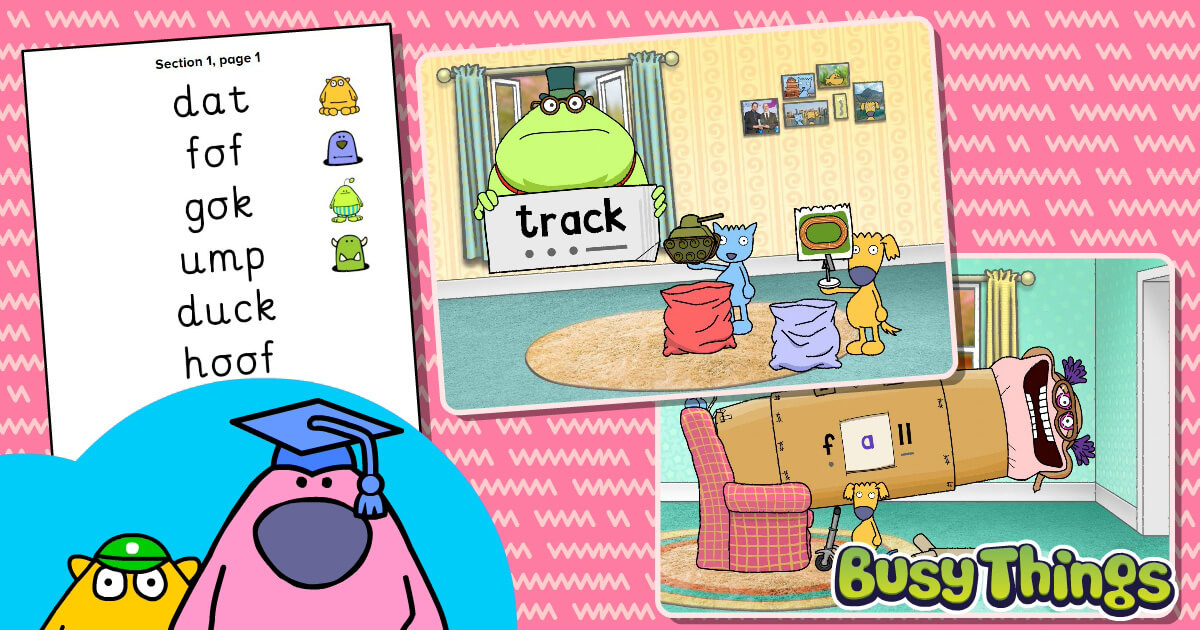
The Phonics Screening Check for Year 1 pupils is a short, one-to-one assessment taken in England and Wales to assess the children’s ability to decode words using phonics. It typically takes 5-10 minutes and includes 40 real and pseudo words.
With the check due to take place during the week of 8th June, we know you, like many teachers, will be looking for simple, effective ways to prepare your Year 1 pupils for the phonics screening check without adding pressure. In this blog post, we’ll share practical phonics activities from our KS1 phonics and literacy area, that you can use with your class straight away.
Year 1 Phonics Screening Check at a glance
- 40 words (20 real words and 20 pseudo words)
- Completed one-to-one with a familiar teacher
- Typically takes 5–10 minutes per pupil
- Pass mark usually 32 out of 40
- Pupils who do not meet the expected standard retake in Year 2
What is the Phonics Screening Check?
The Phonics Screening Check was introduced in 2012 to assess how well pupils can apply their phonics knowledge to decode words.
The check includes both real words and pseudo (nonsense) words. These pseudo words are designed to ensure that pupils rely on decoding skills rather than memory or vocabulary.
Words are presented in order of difficulty, beginning with simple structures and progressing to more complex words with up to five or six letters.
What score do pupils need to pass?
The expected standard for the phonics screening check in Year 1 is typically a score of 32 out of 40.
In recent years, around 80% of Year 1 pupils have met this standard.
Pupils who do not meet the expected standard:
- should receive additional phonics support
- will retake the check in Year 2
If they do not meet the standard in Year 2, schools are expected to continue supporting their reading development, although no further statutory check is required.
Common challenges pupils face
Understanding where pupils may struggle can help you target your preparation more effectively.
Pseudo words
Some pupils find nonsense words tricky, particularly if they are used to relying on memory rather than decoding.
Alternative graphemes
Graphemes that represent different sounds (for example ‘al’ in chalk) can cause confusion.
Confidence reading aloud
Even secure readers can hesitate in a one-to-one assessment situation.
Blending longer words
As word complexity increases, maintaining fluency becomes more challenging.
How to prepare pupils for the Phonics Screening Check
Preparation does not need to be time-consuming, repetitive or stressful. Short, focused practice using engaging activities can make a significant difference.
Key approaches include:
- revisiting familiar phoneme-grapheme correspondences
- practising blending with increasingly complex words
- exposing pupils to pseudo words regularly
- building confidence through reading aloud
Phonics Screening Check activities for Year 1
These activities are ideal for phonics screening check practice in Year 1, helping pupils develop decoding skills in a fun, low-pressure way. They’re engaging for pupils and build the pupils’ confidence while revisiting key word patterns.
Read and feed
Best for: practising CVC, CCVC and more complex word structures
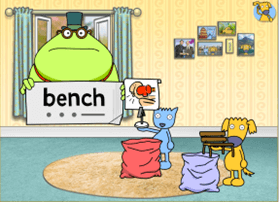
Read and Feed encourages pupils to decode a word and match it to the correct object. It’s ideal for reinforcing decoding skills rather than memorisation.
The activity can be tailored to focus on specific word structures, from simple CVC words to more complex combinations, including consonant clusters.
Advanced sound seek
Best for: exploring alternative phonemes
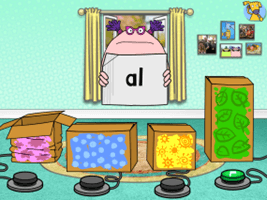
Advanced sound seek focuses on alternative phonemes rather than simple ones, helping pupils become more flexible in their decoding.
For example, pupils explore how ‘al’ can represent different sounds depending on the word. It can be adapted for a range of abilities, making it suitable for stretching more confident readers.
Monster cannon
Best for: choosing the correct pronunciation of graphemes
Monster cannon presents pupils with two possible pronunciations and the children must select the one that forms a real word.
This encourages careful decoding and consideration of all graphemes within a word.
Digging for gold
Best for: recognising alternative grapheme sounds
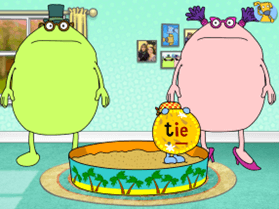
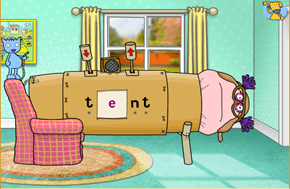
Digging for gold helps pupils understand that graphemes can represent different sounds and gives them opportunities to practise selecting the correct one.
Practising with phonics screening check-style materials
As the check approaches, using familiar formats can help pupils feel more confident and prepared.
Benefits include:
- reducing anxiety through familiarity
- helping pupils understand the structure of the check
- allowing teachers to identify specific gaps
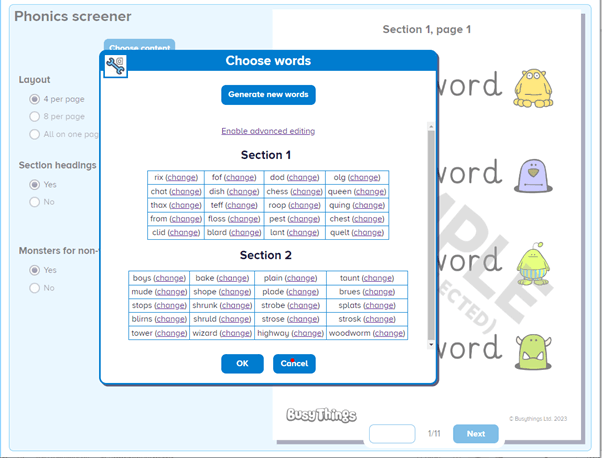
Busy Things includes a Phonics screener, designed to replicate the format of the official check, within its Resource maker. This is particularly useful for phonics screening check practice, as it mirrors the format pupils will see in the real assessment.
To find it, simply click on Resource maker from the upper list of tools on the Welcome page, then select Assessment materials from the English and phonics area.
Like the check itself, it includes:
- four words per page
- pseudo words presented with visual cues
- a progression from simple to more complex word structures
You can also customise:
- the words included
- the level of difficulty
- the overall look and feel
Supporting parents and carers
Many parents and carers will be unfamiliar with the Phonics Screening Check and may feel unsure about how to help.
Sharing clear, simple guidance can make a big difference.
👉 Phonics Screening Check explained for parents
Two quick wins would be:
- playing phonics games to support early reading at home
- focusing on the different sounds as you listen to your child reading aloud.
Phonics Screening Check FAQs
When does the Phonics Screening Check take place?
This year, all Phonics Screening Checks start on 8th June and must be completed during that school week.
What happens if a child is absent during that week?
If a child is absent during the week of the Phonics Screening Check, they can do the check during the week of 15th June.
Which words are tested in the Phonics Screening Check?
The check includes a mix of real words and pseudo words, designed to assess decoding rather than memory.
As a teacher, how can I help pupils feel confident about their upcoming phonics screening check?
Use familiar formats, keep practice short and regular, and include engaging phonics games.
What happens if a child does not meet the expected standard?
They will retake the check in Year 2 and should receive additional phonics support.
When do schools get the results of the Phonics Screening Check?
The pass mark (threshold) is published on the gov.uk website on Monday 22nd June.
Explore more phonics activities for Year 1
If you’d like to see more of our phonics activities (or indeed activities across the whole curriculum), you can start a free 28-day trial of Busy Things.
You and your colleagues will be able to:
- explore a full library of phonics games
- adapt activities to suit your pupils
- identify gaps and support progress
If you’d like a guided walkthrough, you can also request a demonstration.
A final word
With the right preparation, the Phonics Screening Check can be a positive experience for both pupils and teachers.
A combination of consistent practice, engaging activities and familiar formats can help pupils approach the check with confidence.
We hope these ideas support you and your class in the weeks ahead.
All the best for the phonics check!
This blog post was revised and republished in May 2026.