“That’s not how I was taught maths!” Primary school maths explained for parents
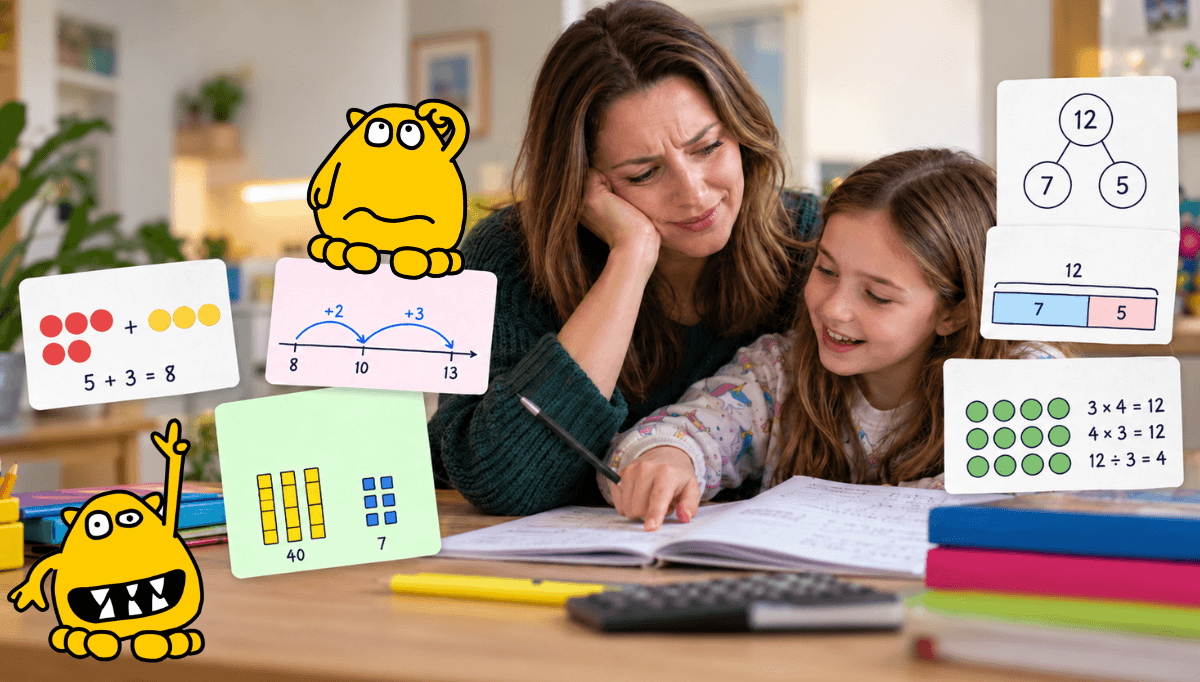
You know the answer is 13.
Your child knows the answer is 13.
But apparently writing 8 + 5 = 13 isn’t enough. There are jumps to 10, circles connected by lines and something called partitioning involved.
If your child’s primary school maths homework looks nothing like the maths you remember learning, you’re not imagining it. The language has changed and some of the diagrams and methods can look baffling!
The National Curriculum has a big focus on children not just getting the right answer, but really understanding the maths behind it.
The pictures, number lines, objects and diagrams are tools used to help them understand how numbers work, solve problems and explain their thinking.
Not every school will use every method in exactly the same way. The curriculum sets out what children need to learn, but schools choose how best to teach it. Here, we’ll give you a quick introduction to some of the methods you might have come across…
What has appeared in the maths homework book?
If there’s one particular thing in the homework book that has you baffled, head straight to it:
| If you’ve seen or heard… | We explain… |
|---|---|
| Counters, cubes or lots of little pictures | Why children use objects and pictures |
| “Subitising” | What subitising actually means |
| Jumps along a line | How number lines work |
| A number being split into pieces | Partitioning |
| Circles, boxes or long bars | Part-whole and bar models |
| “Number bonds to 10” | Number bonds |
| Rows of dots | Arrays |
| “Exchange” instead of “borrow” | What’s changed in written methods |
| You’d like a bit more practice at home | Extra maths practice at home |
Why do children use counters and pictures in maths?
If your child is asked to work out 5 + 3 and starts moving counters around or drawing dots instead of simply writing 8, they’re making the maths visible.
Teachers sometimes call this using concrete and pictorial representations. In plain English, that’s things children can touch and pictures they can see. It helps them understand what the numbers are doing, rather than just remembering an answer.
At home: let them use whatever helps. LEGO, buttons, pasta or even grapes will do. If they’re making two groups, ask:
“How many are in each group?”
“How many have you got altogether?”
See it in Busy Things
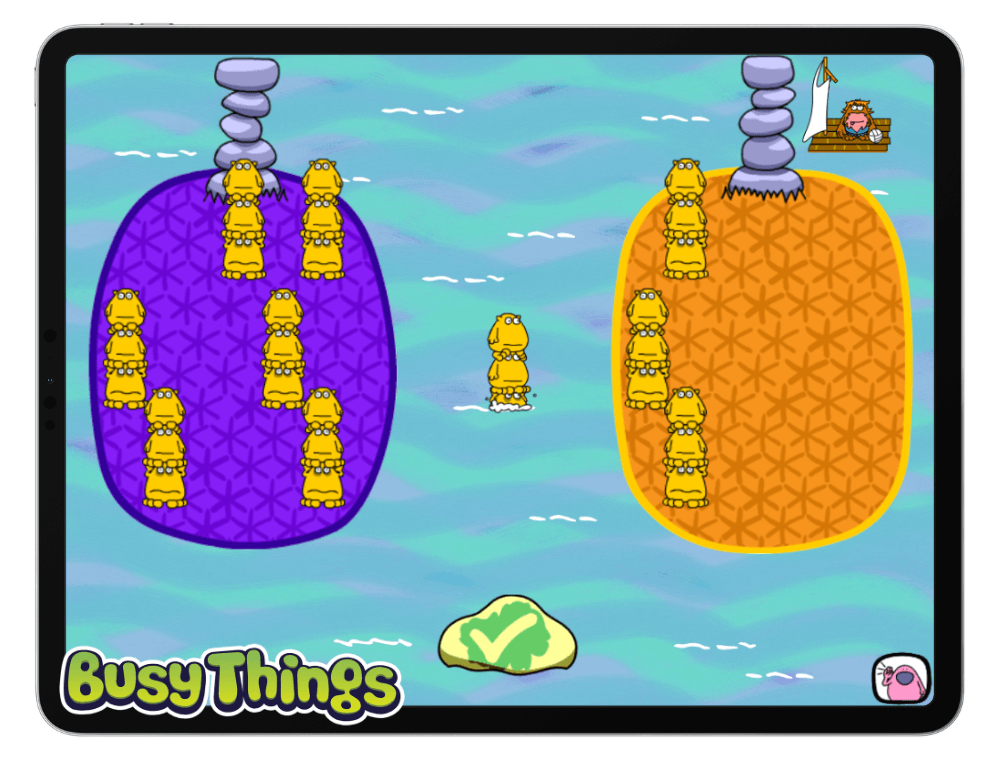
Island Stacks: Island Hopping is a good example of this in action. Children can see and move the quantities they’re working with as they add.
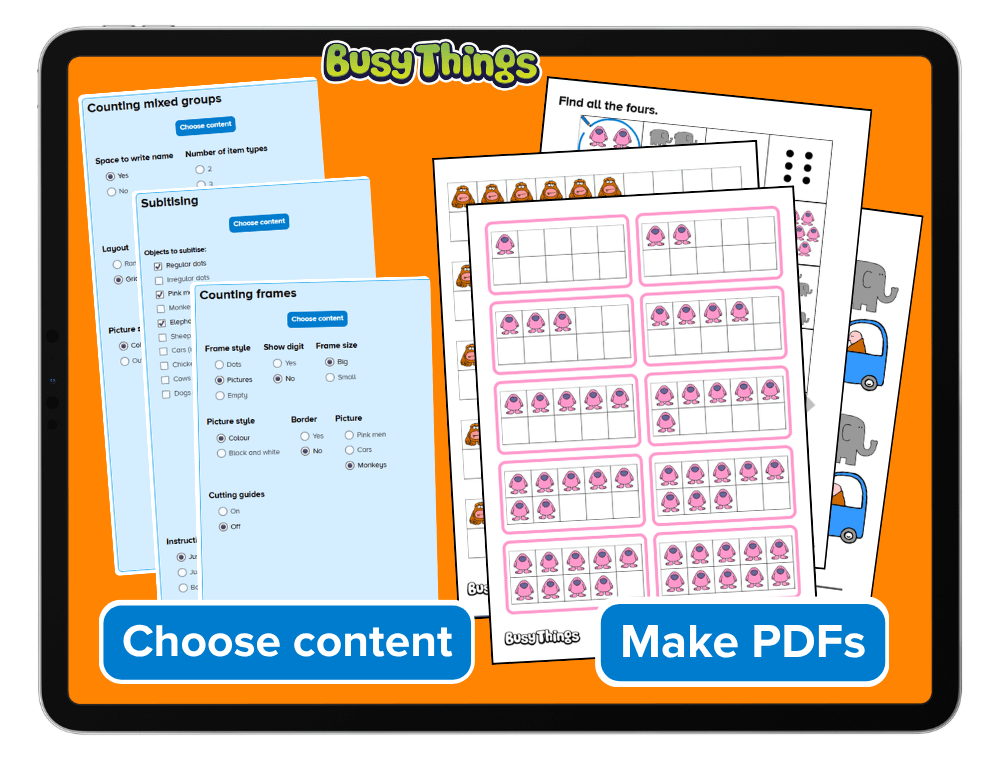
The DIY Resource Maker also includes counting frames for extra visual practice.
Subitising: recognising how many without counting
Subitising simply means recognising how many objects there are without counting them one by one.
Think of the dots on a dice. You can probably look at five dots and know straight away that there are 5, without counting one, two, three, four, five.
Children practise doing the same with small groups of objects and familiar patterns. It helps them get a stronger feel for number, notice patterns and how quantities can be split into smaller parts.
At home: dice and dominoes are perfect for this. Show a pattern and ask:
“How many can you see?”
Then, if you want to take it a little further:
“How did you see it?”
They might say they saw 5 as 3 and 2, for example.
Try it in Busy Things
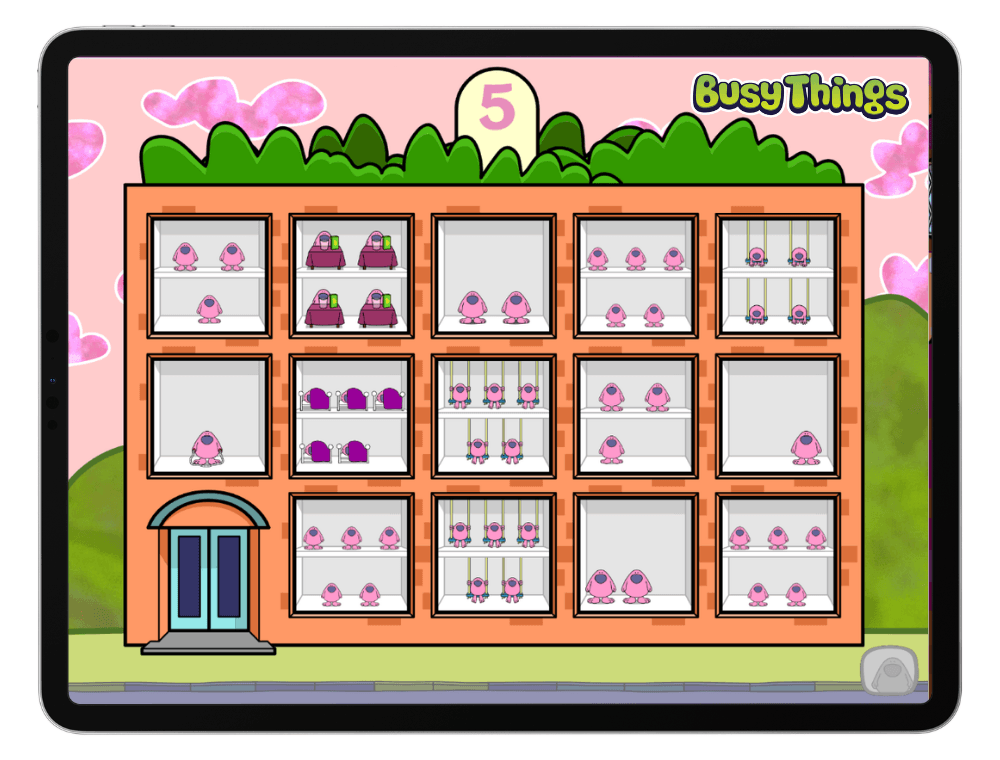
Children can practise subitising with Quantity Street.
We’ve also got a full guide to what subitising is and how to practise it at home if you want to know more.
Number lines: why did they jump to 10?
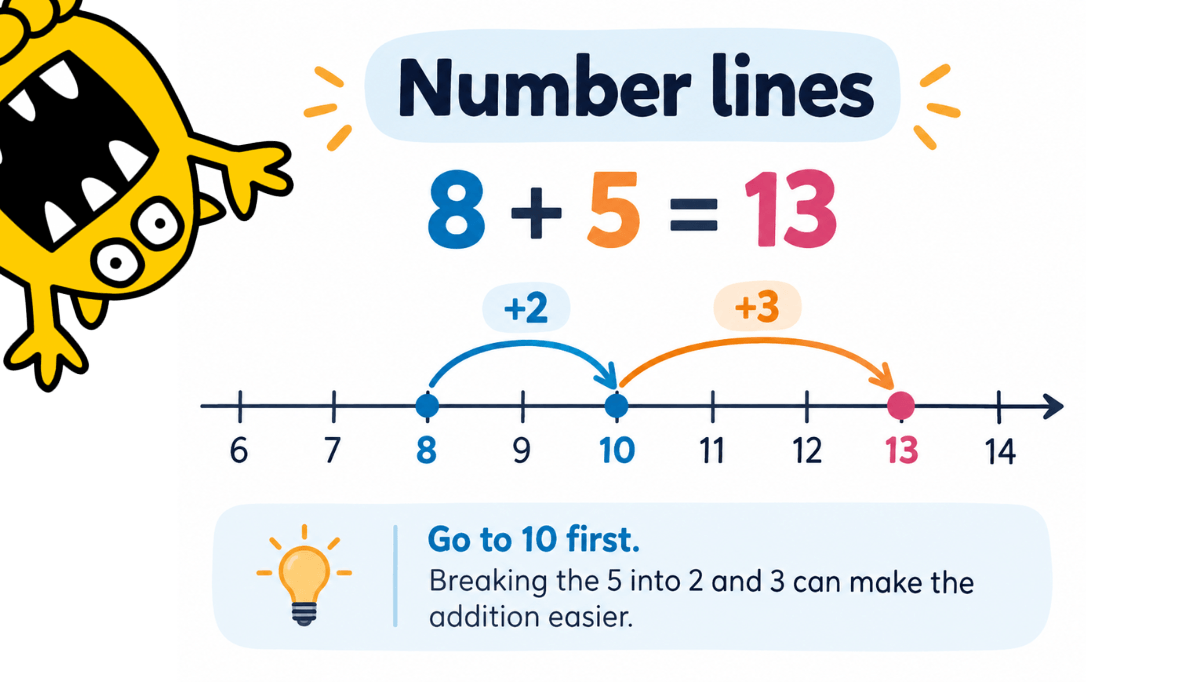
Your child is working out:
8 + 5
but instead of adding five in one go, they jump:
8 → 10 → 13
They’ve split the 5 into 2 + 3. Adding 2 gets them to the useful number 10, then they add the remaining 3.
So:
8 + 5 = 8 + 2 + 3 = 13
It might look like an unnecessarily long way round, but it helps children spot useful number relationships and move away from counting everything one by one.
At home: if they’re using a number line, ask:
“Why did you go to 10 first?”
They may well be able to explain the thinking themselves.
See a number line in Busy Things
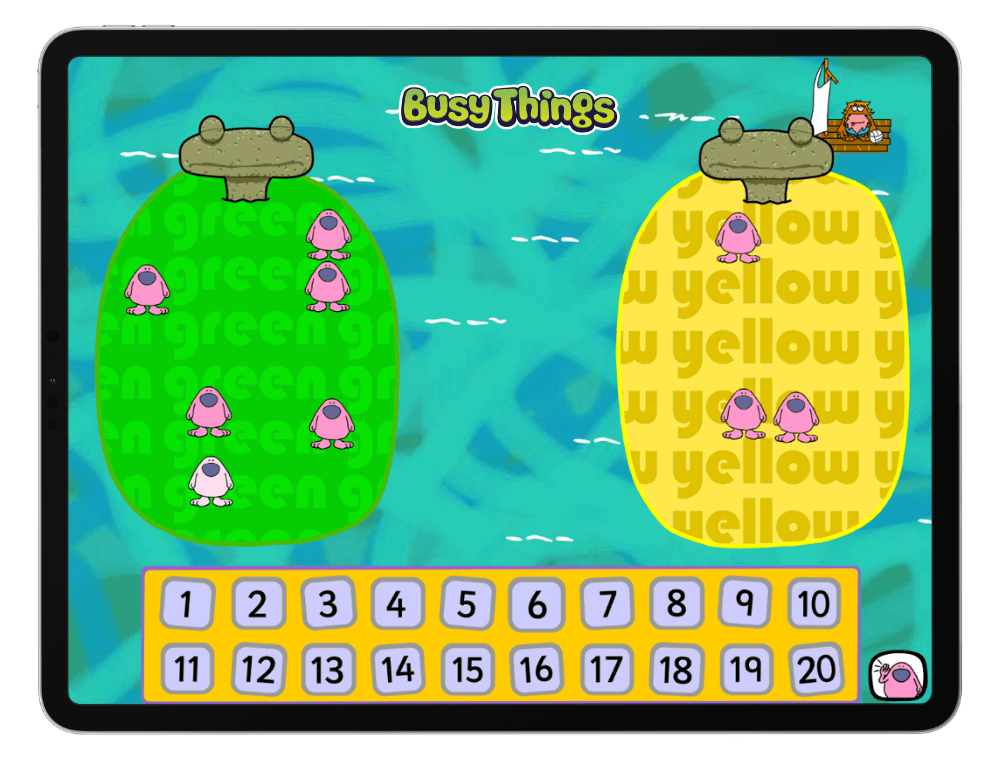
In Island Stacks: How Many?, children count the monsters on each island and work out how many there are altogether, then use the number line to choose their answer.
Partitioning: splitting numbers into useful parts
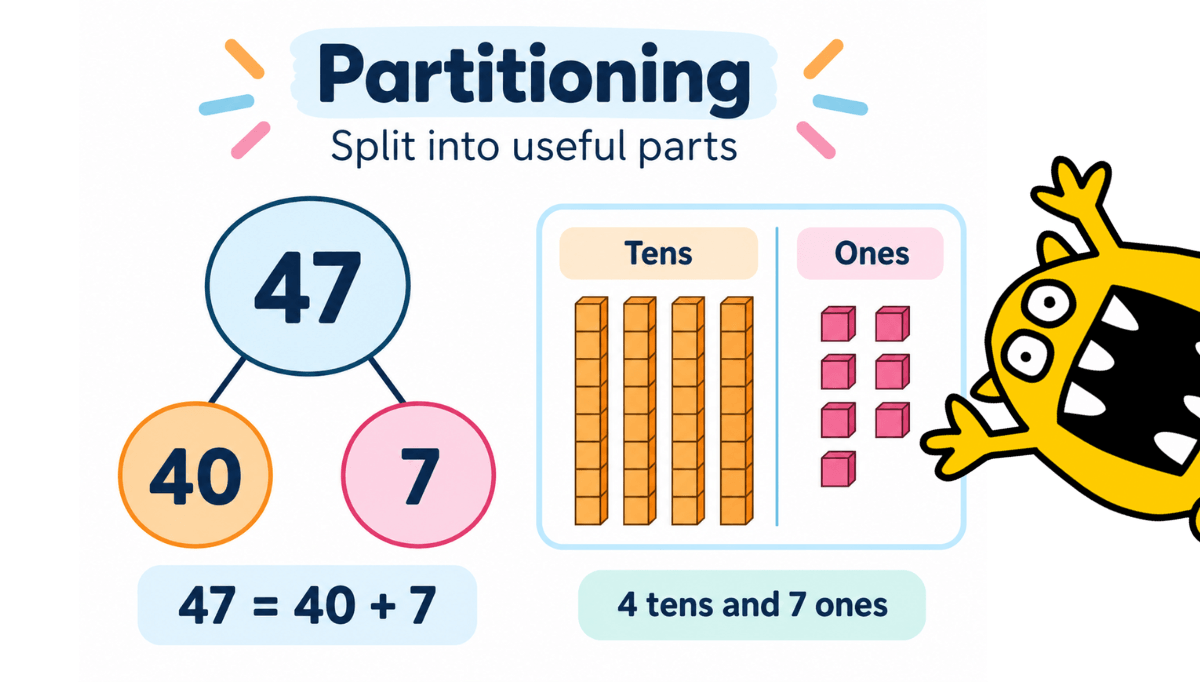
Partitioning simply means splitting a number into smaller parts.
So:
47 = 40 + 7
Here, 47 has been split into 4 tens and 7 ones.
This helps children understand place value. In other words, the 4 in 47 doesn’t just mean 4, it means 40.
Children may split numbers in different ways depending on the calculation they’re doing, but the basic idea is the same.
At home: if your child says they need to partition a number, think:
“What useful parts can we split this number into?”
Experiment in Busy Things
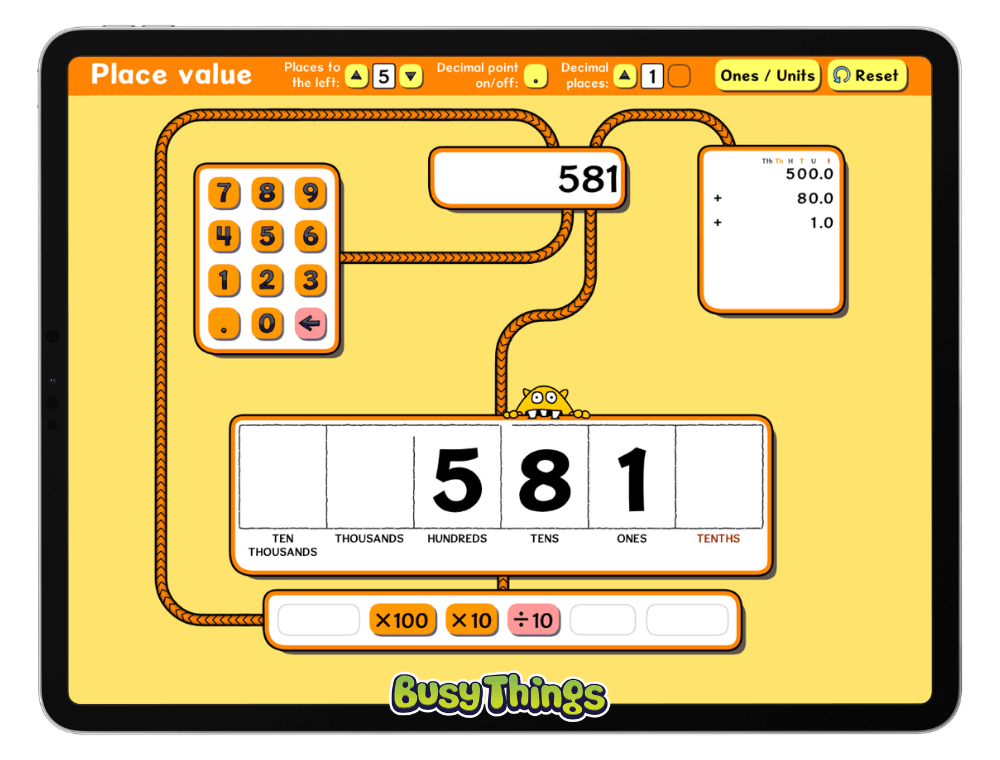
In Place Value, children can enter a number and see it broken down into ones, tens, hundreds and beyond.
Part-whole and bar models: what are all those circles and boxes?
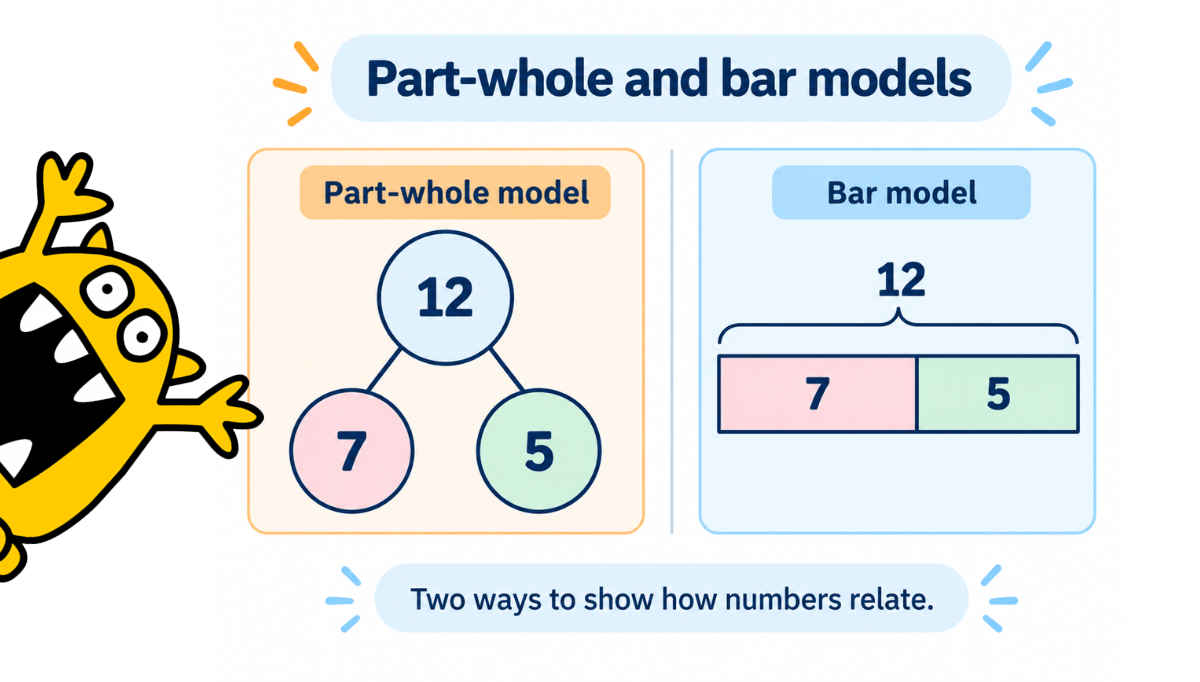
A part-whole model shows how smaller parts combine to make a whole.
So with:
7 + 5 = 12
7 and 5 are the parts, and 12 is the whole.
A bar model shows the same kind of relationship using sections of a bar instead of circles.
These models help children see how numbers are connected. So if they know:
7 + 5 = 12
they can also see:
12 – 7 = 5
12 – 5 = 7
So addition and subtraction start to connect rather than feeling like completely separate bits of maths.
At home: if one appears in the homework book, ask:
“Which number is the whole?”
“What do the parts show?”
Have a go in Busy Things
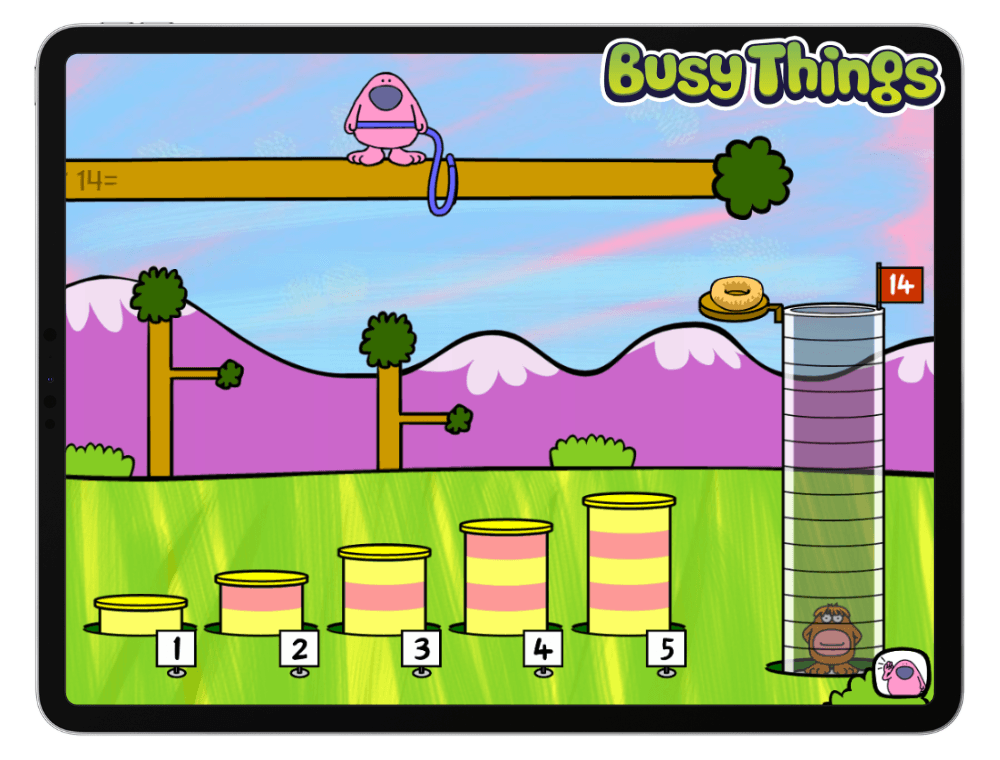
Number Jump is a good example of the same idea in action. Children combine different amounts to reach a target whole.
Number bonds: number facts that belong together
Number bonds are pairs of numbers that combine to make another number.
So the number bonds to 10 include:
1 + 9
2 + 8
3 + 7
4 + 6
5 + 5
The idea is to help children recognise these relationships quickly, rather than working them out from scratch every time.
If they know:
7 + 3 = 10
they can also use that to understand:
10 – 3 = 7
And it links back to the number line earlier too. If a child knows straight away that 8 needs 2 to make 10, that helps them work out 8 + 5.
The curriculum places considerable emphasis on number bonds in Key Stage 1, including knowing bonds to 20 by the end of Year 2. GOV.UK
Practise it in Busy Things
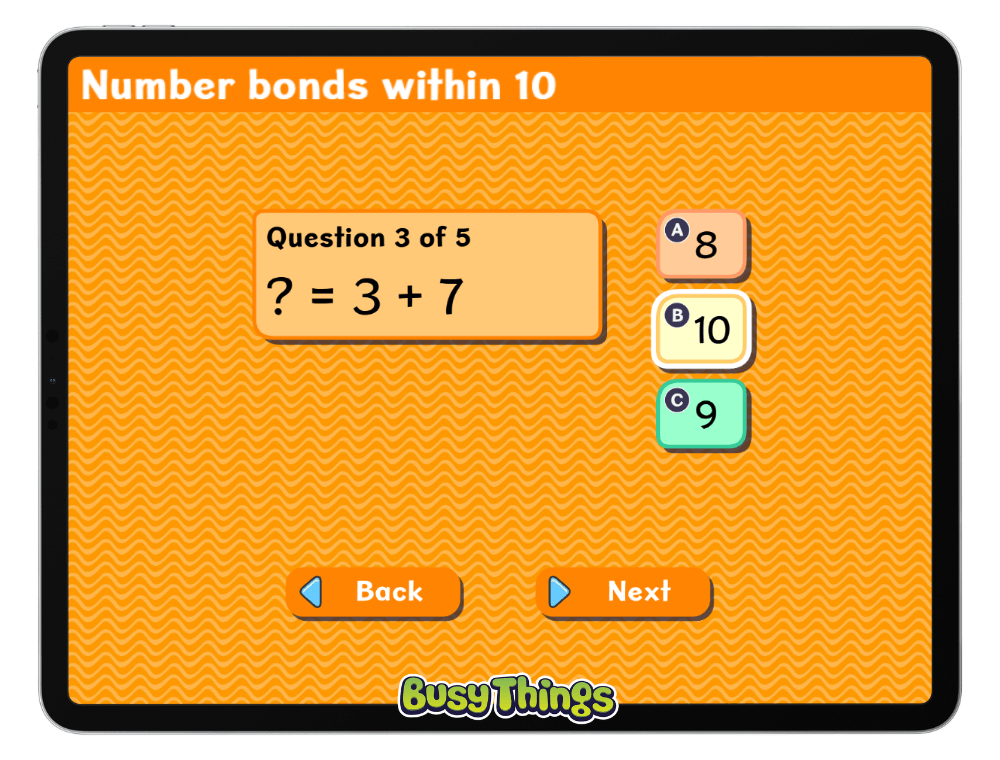
Number Bonds Within 10 Quiz gives children quick practice with these number relationships.
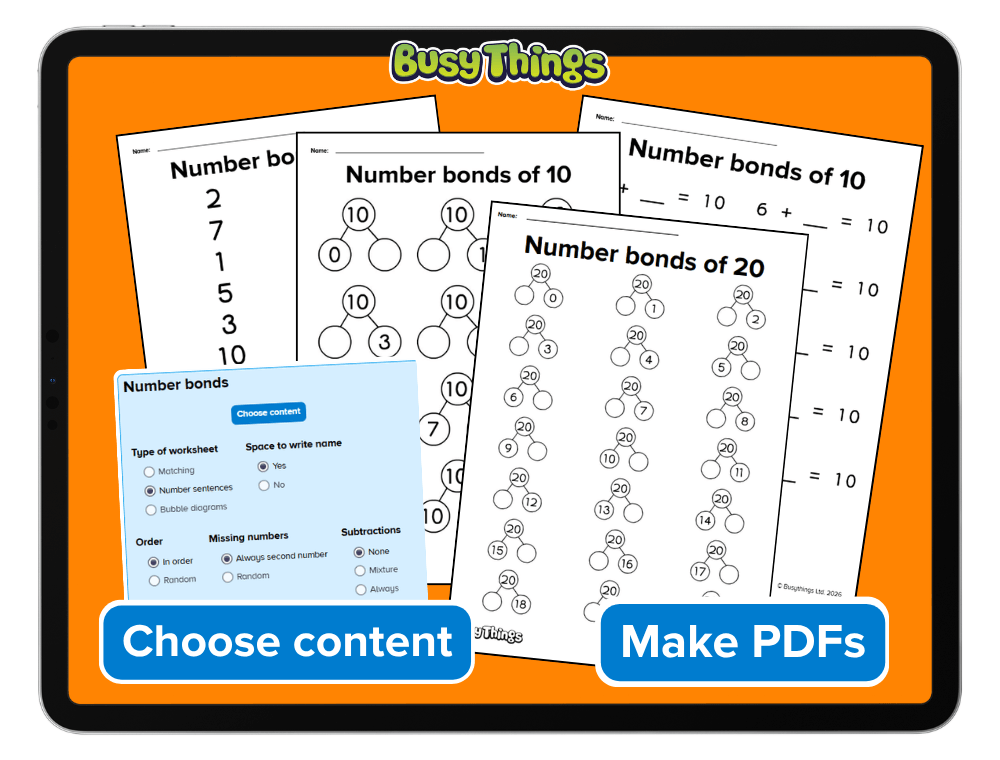
The DIY Resource Maker can also create extra number-bond activities if they need more practice.
Arrays: why has multiplication turned into rows of dots?
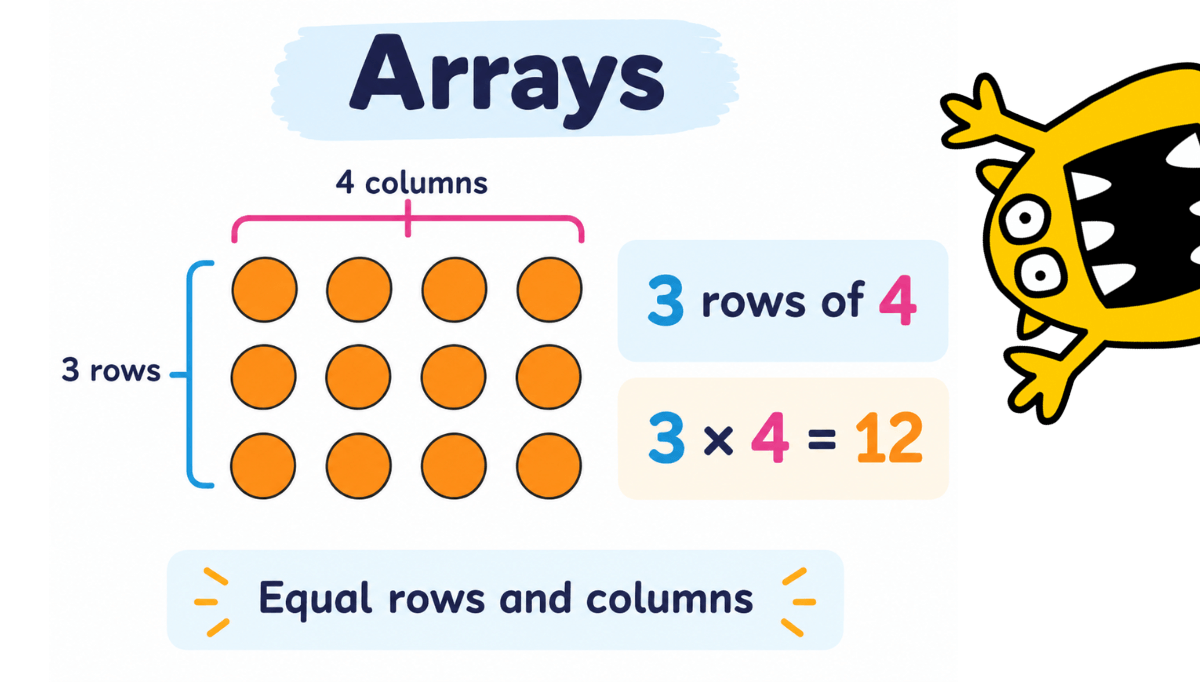
An array is simply objects arranged in equal rows and columns.
So instead of only seeing:
3 × 4 = 12
your child might draw or use an array showing 3 rows of 4, making 12 altogether.
Arrays help children see what multiplication actually means, rather than treating 3 × 4 = 12 as a fact to memorise with no picture behind it.
They also help make the link between multiplication and division clearer.
At home: try making a simple array with LEGO, coins, buttons or grapes. Ask:
“How many rows?”
“How many are in each row?”
“How many altogether?”
If times tables are becoming a sticking point, have a look at our Fun Ways to Practise Times Tables at Home guide.
Practise it in Busy Things

Once children understand what multiplication represents, games can help them build fluency with the facts themselves.
Miner Birds is a fun multiplayer game that gives children practice with multiplication and division.

The DIY Resource Maker also includes times-table grids, times-table sentences and multiplication and division activities.
Do children still learn the written methods we remember?
Yes. The counters, number lines and diagrams aren’t replacing written calculations forever.
As children move through primary school, they gradually learn formal written methods for addition, subtraction, multiplication and division too.
The difference is that they may spend more time first understanding why those methods work.
Why aren’t they “borrowing” anymore?
You might remember being taught to borrow a ten when doing column subtraction.
Your child may talk about exchanging instead.
So if they need more ones, they might say they are exchanging:
1 ten for 10 ones
The calculation itself hasn’t completely changed. “Exchanging” just describes more clearly what is happening to the value of the digits.
So sometimes the maths your child brings home isn’t as different as it first looks. It just comes with different language, and a bit more explanation of what’s happening underneath.
What if I still don’t understand their homework?
There’ll probably still be times when the method your child brings home leaves you completely stumped.
If your child can remember how they were shown at school, let them talk you through it. Often that’s enough to get you both unstuck. Try:
“Show me how your teacher did one like this.”
“Is there an example in your book?”
Getting your child to explain their thinking can actually be useful maths practice in itself.
It’s also worth checking your school website. Many schools publish a maths or calculation policy showing the methods children use in different year groups.
And if you’re still unsure, ask the teacher rather than teaching a completely different method at home. That avoids your child ending up with two competing ways of doing the same thing.
A little extra maths practice at home
Busy Things gives children maths games and activities they can play independently, covering number, place value, calculations, times tables and more.
And if you want some extra practice to work through together, the DIY Resource Maker lets you quickly create number lines, number bonds, counting frames, number sentences and times-table activities at a level that suits your child.
Ready for some extra maths practice?
Try Busy Things free for 7 days and explore curriculum-linked maths games, activities and resources for primary-aged children.