Phonics screening check results: What next?
Congratulations on surviving another year of the phonics screening check! They’re all done, marked and the benchmark has been confirmed to be 31 for the first time.
Before breathing a sigh of relief and informing your parents about the results achieved, we’d encourage you to take some time to review your pupils’ performances and really understand what the scores mean for the individual children and your phonics teaching.
As such, our blog this week and next will look at the phonics screening check and your next steps, drawing on the experiences of one of our own in-house teacher advisors. This, the first of the two blogs, will look at your response for any children that didn’t pass. Next week’s blog will look at the bigger picture, not just for phonics teaching in Year 1, but also for the teaching in Reception and Year 2.
So, how did your pupils do in the Phonics Screening Check?
We’re hoping your class did really well, but we all know things don’t always go to plan. When looking at the results for your class, it’s important to ask the following:
- Are the names of the children on the list that didn’t meet the expected standard the ones you expected to see? If they’re not, perhaps something was amiss on the day, that could explain the lapse in the child’s performance. Had they had an argument in the playground, for example, were they just feeling off-colour or had they been worked up about the test? We all have bad days, and some children can easily get overwhelmed. It’s worth reflecting on whether any of these factors may have affected their performance.
- Of the children that didn’t reach the expected standard, did the children struggle with the same words/phonemes? Was it the more complex words in Section 2 that proved difficult or the pseudo-words?
It can also be useful to review the responses of pupils who achieved the expected standard but scored only just above the threshold. These children may still have gaps in their phonics knowledge that could affect their future reading development.
At the end of the process, you should end up with a small list of children whose results can be explained for unusual circumstances and a list of children to focus on, accompanied by the areas that they struggled with. For both groups, you need to develop a plan of action, as they’ll need to resit the check in Year 2. This could be increasing their familiarity with tests if anxiety was the issue or more focused work on a particular grapheme-phoneme correspondence (GPC). While these areas will continue to be taught and revisited in Year 2, identifying them now allows support to be targeted from the start of the autumn term.
Busy Things can help with both issues through:
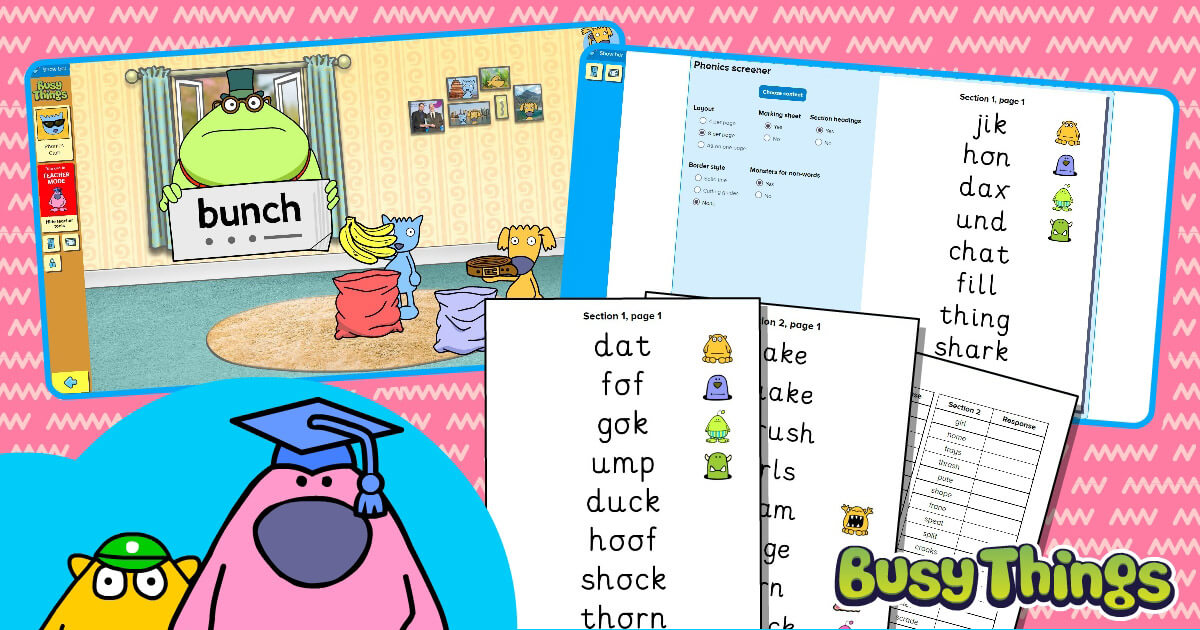
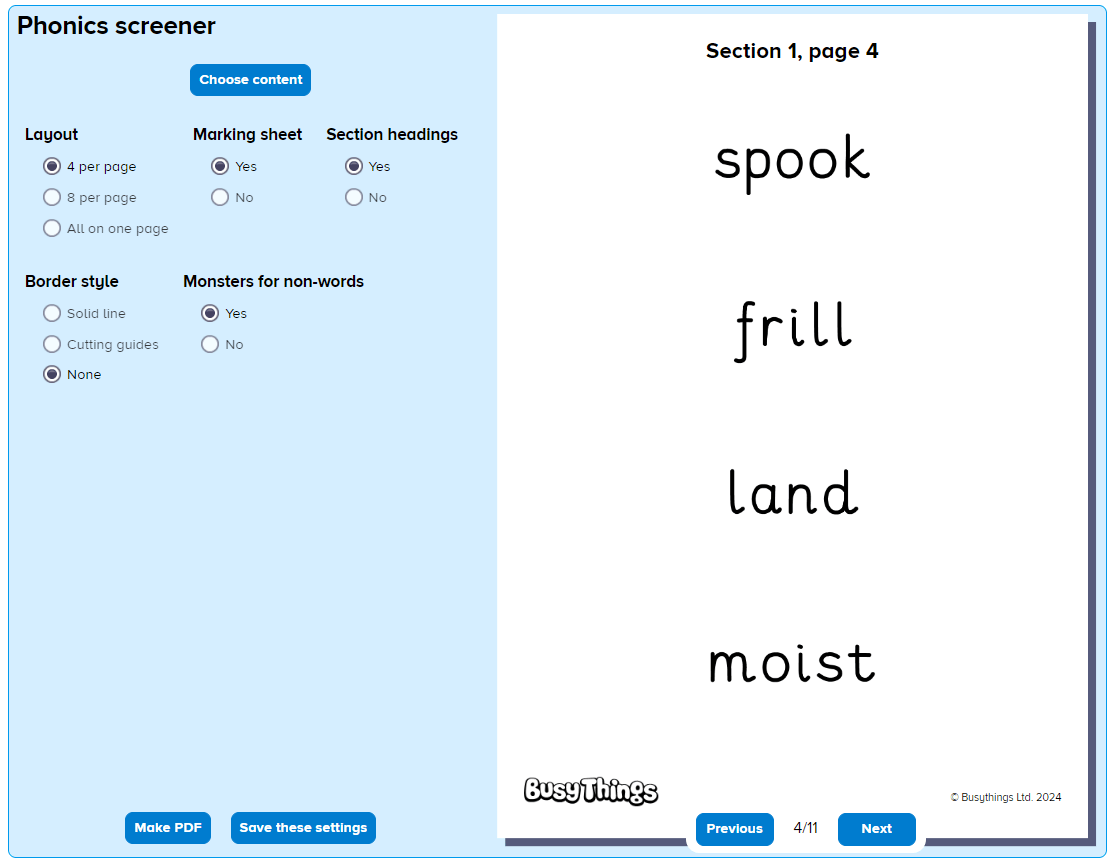
- its own Phonics screener in its Resource maker, which can make printables just like the official one with either a mix of words or specific words you’re looking to practise.
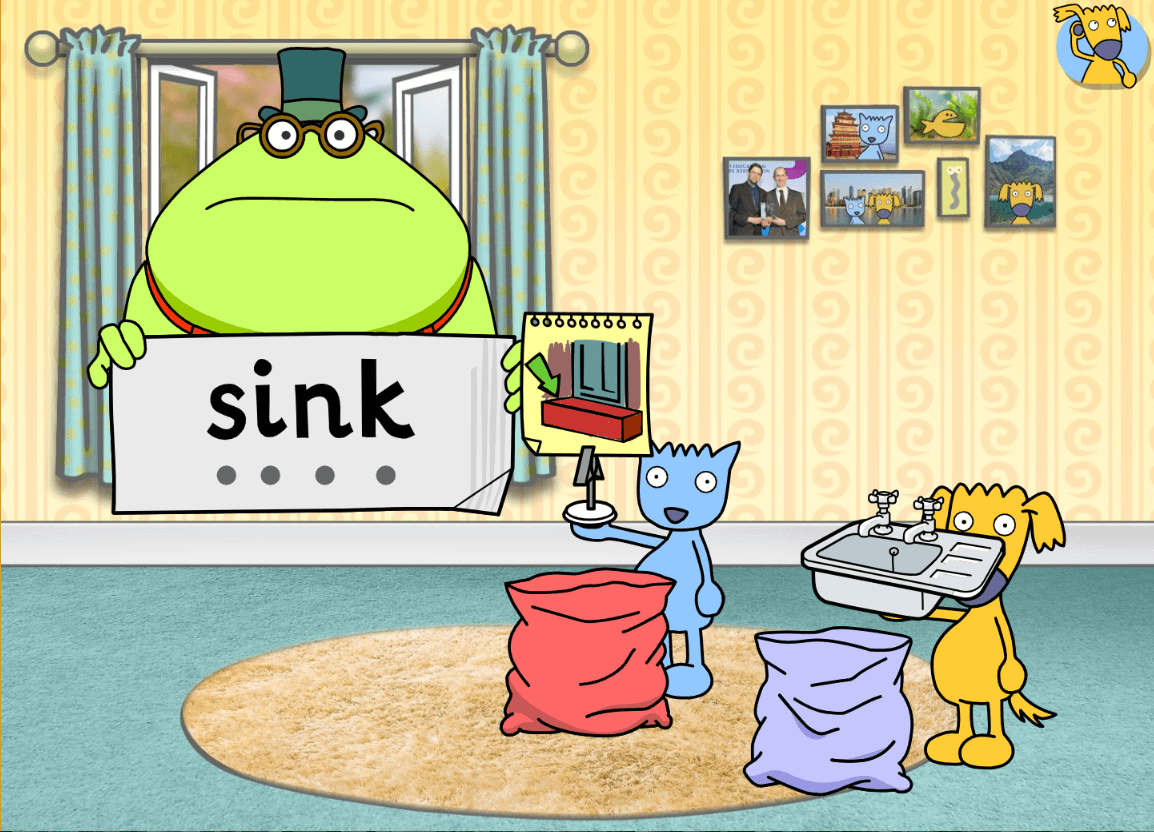
2. over 50+ phonics games and activities, which can be quickly and easily configured to focus on specific phonemes and graphemes.
One example is ‘Read and feed‘, a fun activity that provides extra segmenting and blending practice.
Communicating with parents
Whether the pupil has achieved the expected standard of the check or not, it’s important to communicate the result to the child’s parents. Many will just want the reassurance that their child has passed. But parents whose children haven’t reached the expected standard will understandably want more detail.
Some parents may be surprised if a child who appears to be reading confidently has not met the expected standard. Explaining that the check focuses specifically on decoding unfamiliar words, including pseudo-words, can help parents understand the result in context.
If you can provide an insight as to why the child got the result that they did (i.e., test day, absences, where the gaps in knowledge are) and explain the steps that you’re putting in place, this will help put their minds at ease. It’s also a good time to recruit their help and outline how they can support at home.
There’s no massive rush to do this, however, so ensure you’ve done all the analysis on the results you need to before you reach out to them and have the intervention plan at least drafted.
Whether the child has met the standard or not, it’s good to put the text into context. The check is, after all, a snapshot taken on one day and just one of many parts of the ongoing process of learning to read via phonics. The check does not assess every grapheme-phoneme correspondence pupils have learnt, nor does it include common exception words. Equally important, it assesses only one aspect of reading. Comprehension, vocabulary, fluency and reading for meaning all remain essential components of becoming a successful reader. Furthermore, phonics may be tested in Year 1 but the process continues right through to Key Stage 2.
Celebrate success too
While it’s natural to focus on pupils who have not yet met the expected standard, it’s also worth recognising the achievements of those who have. Many children will have made significant progress in their phonics knowledge throughout Reception and Year 1, regardless of their final score. Taking time to acknowledge that progress will help maintain their confidence and enthusiasm for reading as they move into Year 2.
Summary
Further to the announcement on Monday that the pass mark for this year’s Phonics Screening Check is 31 this time aroud, it’s time to identify which of your pupils have and haven’t reached the expected standard and understand where the gaps in their phonics knowledge are.
Parents need to be informed of the result, but regardless of the outcome, they should also be given the context of the check. It’s not the end of the children’s phonics learning journey even if they have achieved the standard expected. If the child in question hasn’t reached the level expected, their parents will want reassurance, so ensure you have an outline of what these plans will involve.
We hope this blog has provided some useful next steps for all your pupils, whether you’re celebrating their success or supporting them to achieve the standard next year. With a clear understanding of each child’s needs and a targeted plan in place (where appropriate), they’ll be well positioned to make continued progress in Year 2 and beyond. Next week, we’ll be looking at the bigger picture to understand the implications your results have on your school’s phonics teaching in general.
Want to see more Busy Things’ activities?
If you’d like to see more of our activities and games, you’d be more than welcome to take a free trial. This will give you 28 days to look at the other 50+ phonics activities available, as well as activities that cover other areas of the primary curriculum.
This blog post was reviewed and update in June 2026 after the phonics benchmark was confirmed.