Phonics screening check results: What next? Part 2
The phonics screening check is all done and the pass mark confirmed to be 31 this year.
Last week our blog looked at the next steps you could consider for individual children who didn’t meet the expected standard. This week, we’re stepping back to look at the bigger picture and consider what your results might tell you about your phonics provision and any next steps for next year.
So how was the phonics screening check for you?
Looking at your results for this year’s check and thinking about the trends in performance and surprise outcomes will undoubtedly help you plan for next year. Ask yourself, did your more able pupils do as well as expected? Did some pupils know the sounds but struggle with the blending? How did pupils learning English as an additional language do?
To help you with this, we’ve broken school performances down into three categories:
- The vast majority of your pupils reached the expected standard
- A significant proportion of pupils found the more complex words (Section 2) and pseudo-words tricky
- Some of your pupils need additional support
1. The vast majority of your pupils reached the expected standard
If this is you, well done! Your pupils can read a large number of different words, whether they’ve come across them before or not, and have retained the grapheme-phoneme correspondences (GPCs) they’ve learnt.
Give them (and your team) a well-deserved pat on the back and encourage them to keep going in Year 2 and beyond, where their grounding in phonics will continue.
Pupils learning to read frequently encounter words they’ve not seen before so they’ll need to keep their decoding skills honed. Good phonics knowledge is also key for developing strong spelling skills as children need to choose which letters represent the sounds they hear.
2. A significant proportion of pupils found the more complex words (Section 2) and pseudo-words tricky
If your pupils struggled with the more complex grapheme-phoneme correspondences in Section 2 or the pseudo-words, it would be worth reviewing:
a) The content and coverage of the phonics programme you’re using
Are all the GPCs covered in the programme you follow? Does the programme have a systematic approach, so the children are learning each grapheme in the same way?
b) The pace and quality of your phonics teaching in both Reception and Year 1
Most programmes cover all 40+ graphemes in Reception, alongside developing good blending skills. That way, Year 1 can be spent on less common graphemes and alternative sounds for graphemes. New graphemes should be introduced systematically, whilst revising and consolidating the ones you’ve already taught. Is this the case in your school? If not, it may be worth reviewing whether your current materials and timetable are supporting pupils to learn and revisit all GPCs systematically. Perhaps time could be set aside for same-day ‘catch-up’ sessions for those children who are close to reaching the expected standard but maybe just need further support in certain areas?
When considering your phonics programme, it’s also worth asking if your pupils engage with the content to the same extent. If the standard format of the scheme you’re following is not working for everyone, it might be worth supplementing it with materials that adopts a different approach for some pupils.
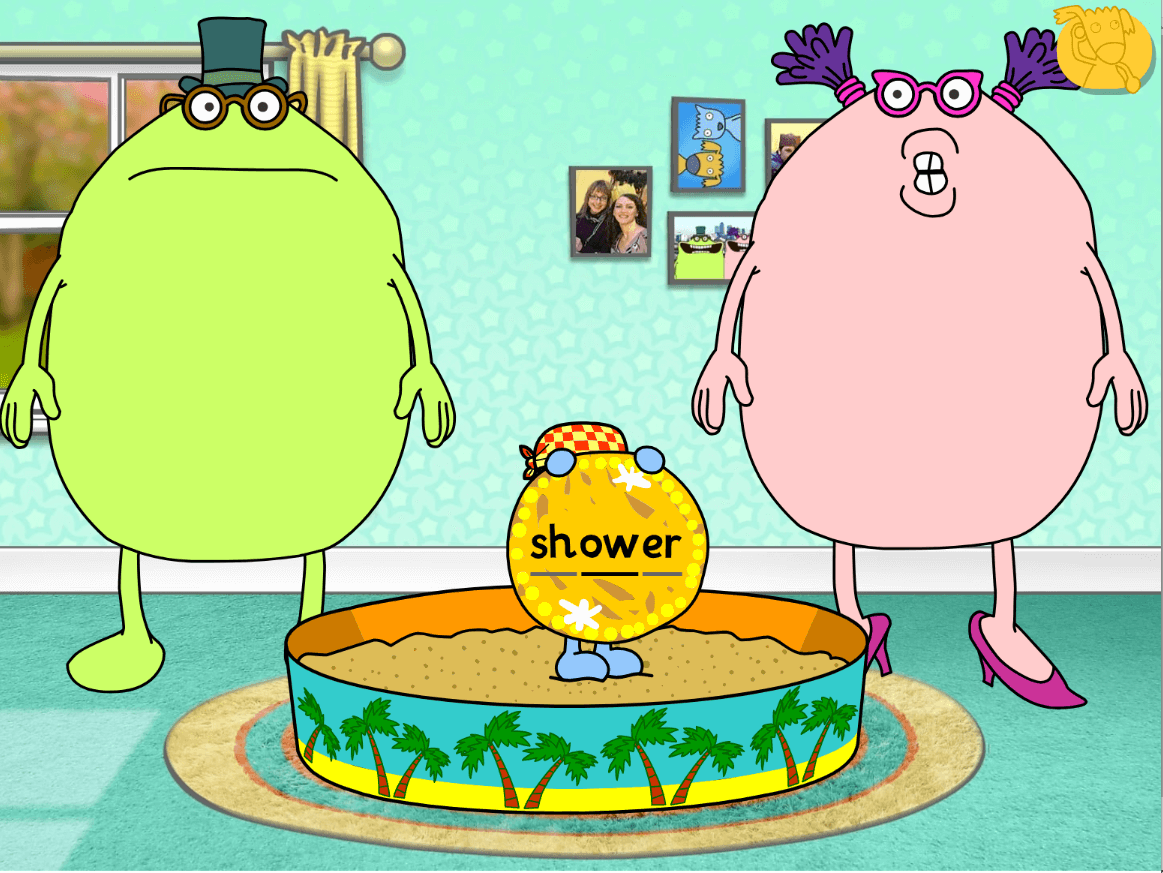
Busy Things has a wide selection of fun, interactive phonics activities which allow you to focus on specific graphemes. They’re great for focused learning and targeted revision, and can even prioritise the latest GPCs you’ve covered.
‘Digging for gold’ (right) is a fantastic activity for exploring alternative phonemes, reinforcing the process of sounding out the word before blending it.
It’s also worth considering whether some children need additional support with oral blending and vocabulary development. Strong language skills underpin successful reading and can make decoding and blending easier.
Regular assessment can also help identify misconceptions early, allowing gaps to be addressed before they become barriers to future learning.
c) How your pupils approach reading unknown words
If your pupils did well on reading the real words but not the pseudo-words, it may be that the children are not using phonics as their first approach to deciphering new words but are reading by sight instead. If this is the case, more attention needs to be given to decoding so that pupils increasingly use a phonics-based approach when reading unfamiliar words. It helps if pupils have the opportunity to apply their decoding knowledge and skills to decodable books/activities. Does your school have such resources available?
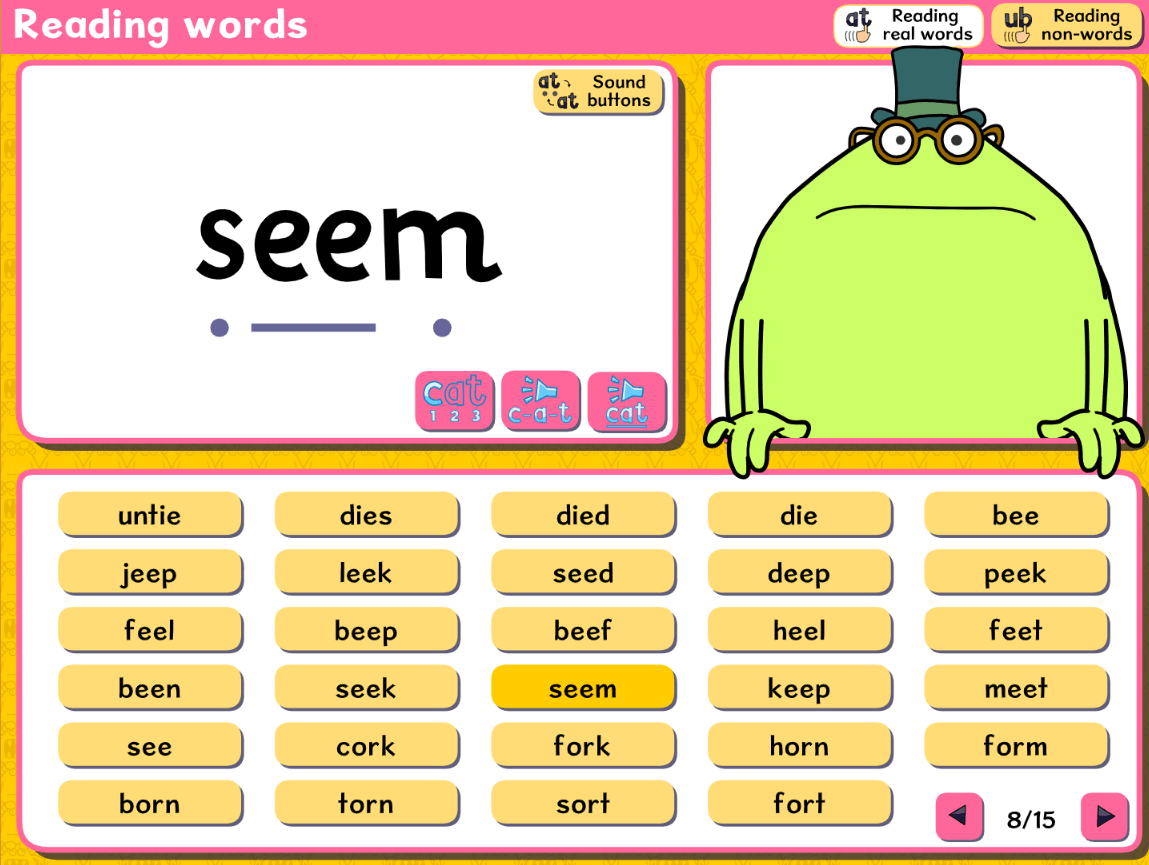
Busy Things’ ’Reading words’ activity (left) is particularly good for revision purposes and allows you to focus on real or pseudo-words.
Activities like this allow the pupils to see the value of the phonics they are learning and feel that they are successful readers.
3. Some of your pupils need additional support
If your phonics provision appears to be working well overall and some pupils have still not met the expected standard, think about whether the outcome was what you expected. It may have been a one-off problem on the day of the check. Alternatively, it could confirm what you already suspected: for some pupils, difficulties with the phonics screening check may be part of a wider pattern of learning needs.
Looking at other evidence, including classroom observations, assessments and discussions with previous teachers and parents, can help build a fuller picture of the support that may be needed. The key here is to act either by discussing the child or children affected with your SENDCO and/or with the parents, so that the necessary next steps can be decided upon and actioned.
Summary
We hope this blog has been useful in outlining steps you might take to improve your phonics teaching and learning. Ultimately, the aim isn’t simply to improve next year’s phonics screening check results but to ensure every child develops the decoding skills and confidence they need to become a successful, lifelong reader. The phonics screening check can provide valuable information, but it is only one snapshot of children’s reading development and should always be considered alongside your wider knowledge of each child as a reader.
If you’d like to see some of our activities and games, you’re more than welcome to take a free trial. This will give you 28 days to look at the other 50+ phonics activities available, as well as activities for other areas of the primary curriculum.
This blog was reviewed and updated in July 2026.