How to prepare your Year 6 pupils for SATs
As we move into the second half of the Spring term, Year 6 classrooms across the country sharpen their focus on SATs. Planning becomes more forensic. Gaps are revisited. Confidence is built deliberately and steadily.
Many teachers will already have well-honed systems in place, refined year after year. Yet no two cohorts are ever the same. What works seamlessly one year may need careful adjustment the next. And while SATs may feel routine to us, they are completely new to the pupils sitting in front of us.
That is why preparation has to go beyond coverage and practice. It must include confidence, reassurance and a consistent focus on wellbeing.
SATs matter. But they are not the sole measure of a child’s potential. In the bigger picture, their resilience, self-belief and mental health are far more important than a single set of results.
With that in mind, here are the key elements of an effective SATs-readiness plan.
1. Preparation is strategic
Effective preparation begins with honest reflection. Before mapping out this year’s approach, it is worth stepping back and asking:
- How did we perform last year?
- How did we compare with national averages?
- Where were our strengths?
- Where did pupils struggle?
The answers will guide whether you need to refine last year’s plan or rethink elements more significantly.
So, how did SATs go nationally last year?
According to published national data, there was a slight improvement in outcomes compared to 2024. However, attainment in most subjects has not yet returned fully to pre-pandemic levels.
- 62% reached the expected standard in all of reading, writing and maths, up 1% from 2024
- 75% met the expected standard in reading, up from 74%
- 74% met the expected standard in maths, up from 73%
- 72% met the expected standard in writing, an increase of 0.4%
- 73% met the expected standard in English grammar, punctuation and spelling, up from 72%
This context can help inform realistic targets and strategic deployment of support.
2. A balanced approach to preparation
A strong SATs preparation model typically combines:
- High-quality whole-class teaching and structured revision
- Targeted interventions based on precise assessment
- Purposeful formative assessment
- Clear revision guidance
- Individualised recommendations for support
- Carefully timed exam practice
The key is balance. Practice builds familiarity and stamina, but it should sit alongside continued teaching, retrieval and responsive intervention.
Practice papers with purpose
Structured practice helps pupils develop fluency and confidence, particularly in maths, without exhausting the limited supply of past papers.
Creating bespoke materials can allow you to focus tightly on the areas your cohort needs most support with.
Busy Things’ Resource maker, for example, enables you to generate maths papers drawing from a large bank of Year 6 SATs-style questions.
Located in the Assessment materials section, you can choose the content you want to focus on:
• Questions 1 to 18, targeting whole number operations and decimals
• Questions 19 to 36, covering fractions and long multiplication and division
• The full paper to test and develop stamina
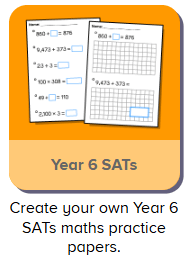
Because questions are randomly generated, pupils encounter fresh material each time, reducing the risk of memorisation and encouraging genuine reasoning.
How you use these materials will depend on your objective. They can be powerful modelling tools, great for opening up discussions around method, common misconceptions and alternative strategies. They can also provide insight into how individual pupils perform independently.
If practising under timed conditions, you may wish to approximate test timings. For example:
- Questions 1 to 18: 10 minutes
- Questions 19 to 36: 20 minutes
- Full paper: 30 minutes
Used thoughtfully, this kind of structured exposure builds familiarity without creating unnecessary pressure.
Making the most of past papers
Past papers remain invaluable, particularly as the tests draw nearer.
They help pupils:
- Understand the structure and language of the assessments
- Become familiar with marking schemes
- Practise working at sustained pace
For teachers, they offer a reliable indicator of likely outcomes and highlight areas requiring final refinement. Given their limited number, careful timing of their use is however essential.
Targeted interventions
Once key gaps are identified, targeted intervention becomes far more effective.
Busy Things provides a wide range of Key Stage 2 activities that can support specific areas of need.
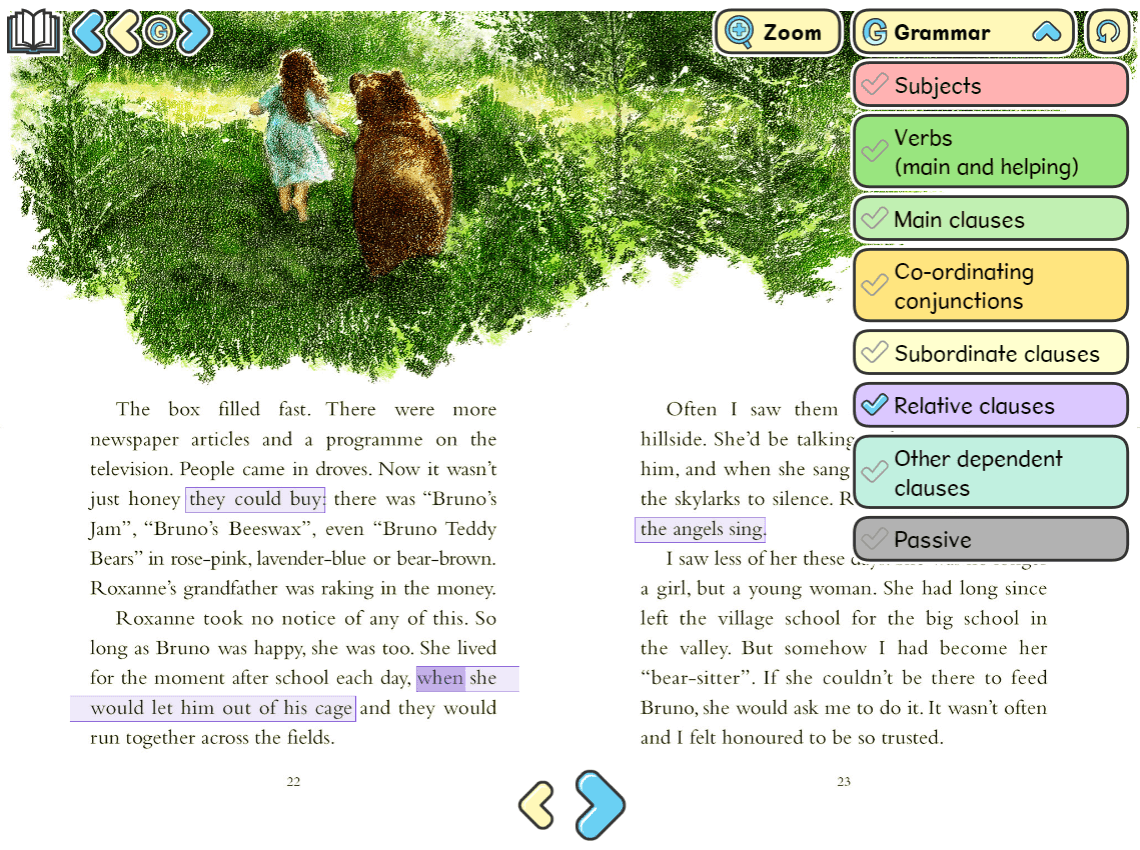
For example, in English, pupils may need additional practice identifying different clause types within complex sentences.
Book extracts such as those from Michael Morpurgo’s The Dancing Bear offer meaningful contexts for exploring grammar in action.
In maths, the calculations domain remains central.
Interactive activities focusing on addition, subtraction, multiplication and division, including ordering and reasoning tasks, can reinforce procedural fluency while encouraging deeper understanding.
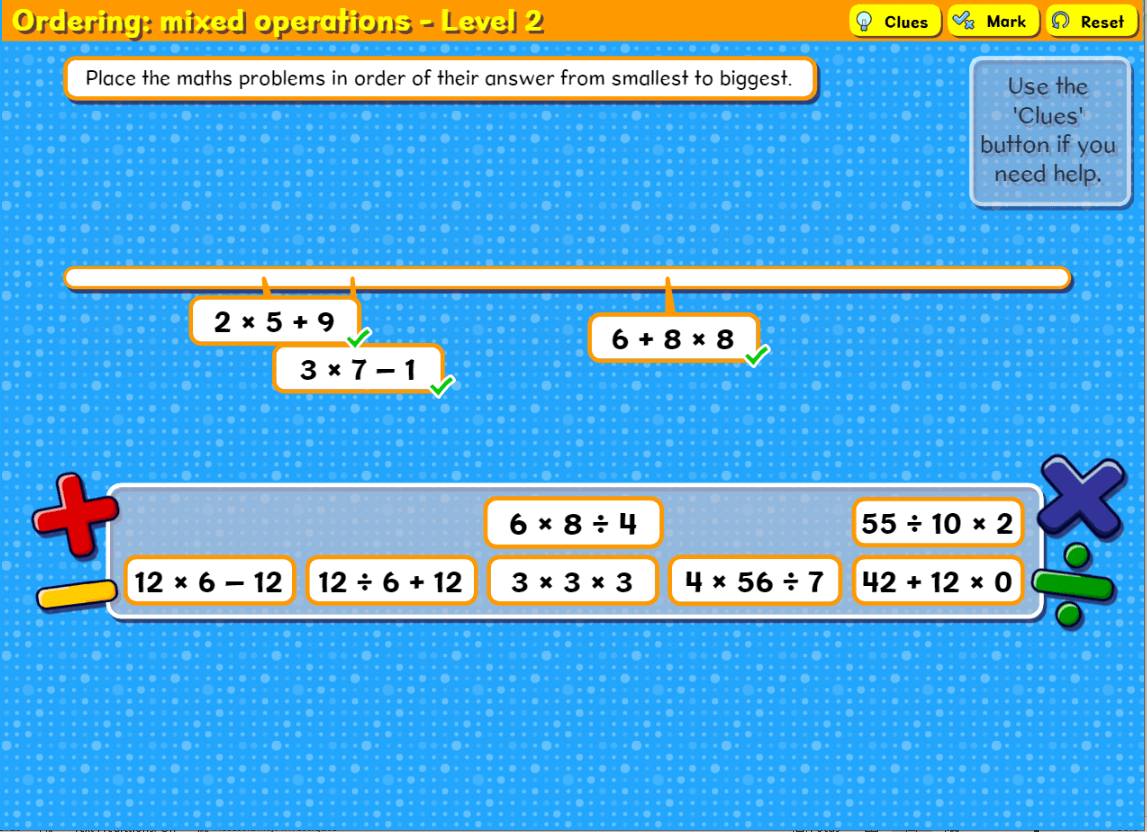
The most impactful interventions are short, precise and directly linked to identified misconceptions.
3. Manage exam stress
Preparing children for SATs does not need to create anxiety. In fact, when handled carefully, it can strengthen resilience and self-belief.
Securing marks
Encourage pupils to:
- Read each question carefully, then re-read it
- Underline or circle key information
- Show their workings clearly
- Refer explicitly to the text in reading responses
- Double-check answers if time allows
- Ensure every page and question has been completed
These habits build both accuracy and confidence.
Managing time
Remind pupils that:
- They do not have to complete questions in order
- If they feel stuck, it is sensible to move on and return later
- Pupils who work more slowly may benefit from tackling higher-value questions first
Practising these strategies in advance prevents them from feeling unfamiliar on the day.
Regulating nerves
It is helpful for pupils to understand that some nerves are normal and can even enhance performance. A small surge of adrenaline can sharpen focus.
If anxiety becomes overwhelming, reassure them that pausing briefly is acceptable. Slow breathing, closing their eyes for a moment and mentally resetting can help them regain composure.
Embedding these techniques before SATs Week makes them far more effective when needed.
4. SATs Week itself
After months of preparation, the final week is about calm consistency.
A simple principle often works well: calm mornings, lighter afternoons.
- Encourage pupils to arrive in good time so they can settle without rushing.
- Offer a filling, balanced breakfast to sustain concentration.
- Keep afternoons purposeful but relaxed, avoiding heavy cramming. Fresh air, movement and creative activities can help pupils recharge.
- Mark the end of the week in a way that feels celebratory and inclusive. Whether that is an outdoor games afternoon, a shared treat or a themed activity, acknowledging their effort matters.
The goal is not perfection, but steady focus and emotional stability.
5. Summary
Successful SATs preparation is rarely about last-minute cramming. It is the result of thoughtful reflection, precise intervention, structured practice and a strong emphasis on wellbeing.
Even the most experienced Year 6 teachers refine their approach each year. If one idea here prompts a small adjustment or reinforces what you are already doing well, then it has served its purpose.
Activities and further support
We have mentioned a couple of sample activities within this blog, including the The Dancing Bear book extract and an interactive maths ordering worksheet.
If you would like to explore more, you are welcome to take out a free 28-day trial to see how Busy Things can support your SATs preparation. You can also arrange a virtual tour via Teams to explore the platform in more detail.
If you feel there is an approach we have not covered, do let us know. Sharing insights across schools strengthens practice for everyone.
This blog was revised and updated in March 2026.