7 engaging ways to get your pupils excited about space this World Space Week
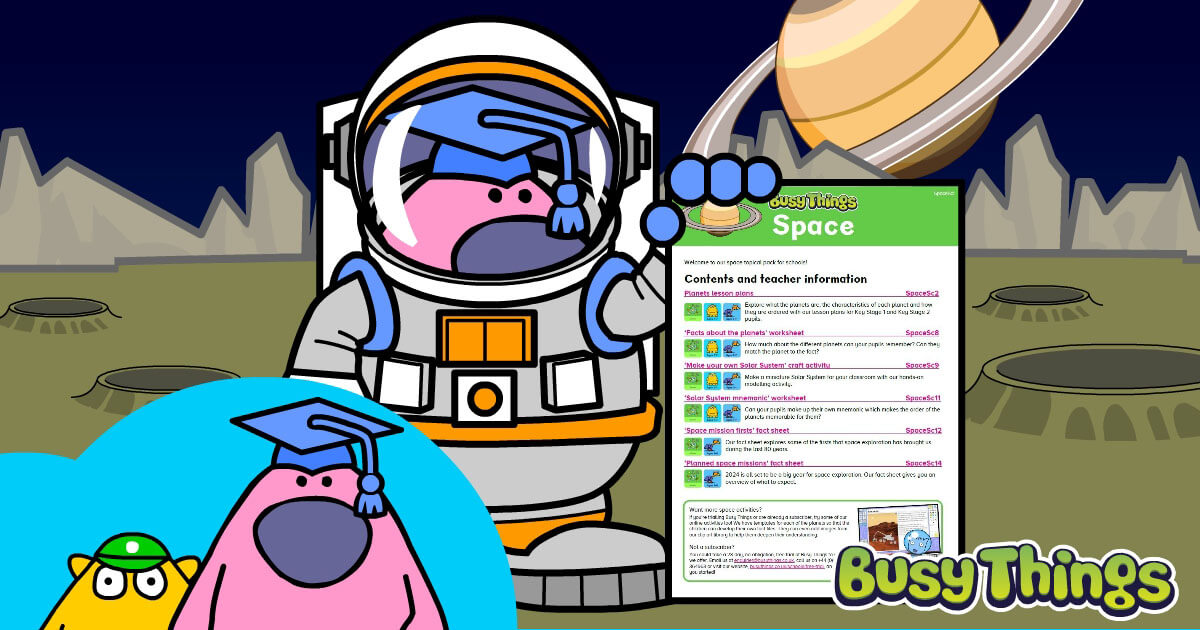
Space is a subject that is almost guaranteed to get children excited.
Perhaps it’s the thought of travelling to another planet, wondering whether there’s life somewhere beyond our Solar System or simply discovering that Saturn has rings and Jupiter is enormous. Whatever captures their imagination, space provides plenty of opportunities to explore science, ask questions and learn some amazing facts along the way.
Whether you’re teaching space as part of the science curriculum or looking for an engaging topic to spark their curiosity, here are seven ideas to get your pupils exploring the universe this World Space Week.
In this blog
- Start with a planetary challenge
- Build your own Solar System
- Become space mission experts
- Plan a mission of your own
- Ask the questions that textbooks don’t answer
- Test your pupils’ space knowledge
- Let curiosity lead the way
1. Start with a planetary challenge
How much do your pupils already know about the planets?
Give them a selection of planet facts and challenge them to work out which planet each one describes.
Which is the red planet? Which is the largest? Which has rings? Which is closest to the Sun?
Our Space topical pack includes ready-to-use planet fact-matching activities for Key Stage 1 and Key Stage 2 to help pupils consolidate their knowledge.
2. Build your own Solar System
It’s one thing to learn the names of the planets, but quite another to think about where they actually are.
Challenge your pupils to create their own model of the Solar System. They could research the planets, decide how to represent their relative positions and explain what they’ve discovered to the rest of the class.
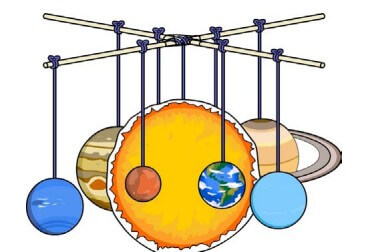
It’s a hands-on way to help pupils think about the structure of our Solar System rather than simply memorising a list of planets.
There’s a Solar System modelling activity in our Space topical pack to help you get started.
3. Become space mission experts
Space exploration is full of incredible stories.
Challenge pupils to investigate some of the key moments in space exploration. Who was first to do what? Which missions changed what we know about space?
The answers can lead to some fascinating conversations about how our understanding of space has developed over time.
Our Space Mission Firsts fact sheet provides a ready-made starting point for this activity. Check it out in our FREE Space topical pack!
4. Plan a mission of your own
Now turn your pupils from space historians into space mission planners.
Imagine they’re responsible for planning the next mission into space.
Where would they go? What would they want to discover? What equipment would they need? What problems might they encounter?
You could give different groups different destinations and ask them to justify their choices.
The activity encourages children to use what they know about space while thinking creatively about what might happen next.
Our Space topical pack includes a list of planned space missions to introduce pupils to real missions planned for 2026-27.
5. Ask the questions that textbooks don’t answer
Space can leave children with some wonderfully unexpected questions. Give them free rein to get creative and think out of the box! Some questions may be amongst these:
- What do astronauts eat?
- How do they sleep?
- How do they go to the toilet?
- What does it actually feel like to live and work in space?
Can they find answers anywhere?
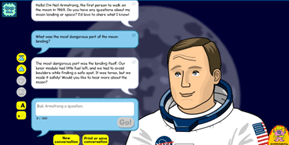
Busy Things’ Interview Neil Armstrong AI-powered activity is a great resource for something like this. Pupils can ask the world-renowned astronaut anything about life in space and space missions.
6. Test your pupils’ space knowledge
Once you’ve explored the topic, see what your pupils can remember.
A quick quiz or interactive challenge can be a great way to revisit key vocabulary and facts about the planets and Solar System.
For example, can pupils:
- Name the planets in order?
- Match planets to their characteristics?
- Explain what makes Earth different?
- Remember key space missions?
- Identify the planets from a series of clues?
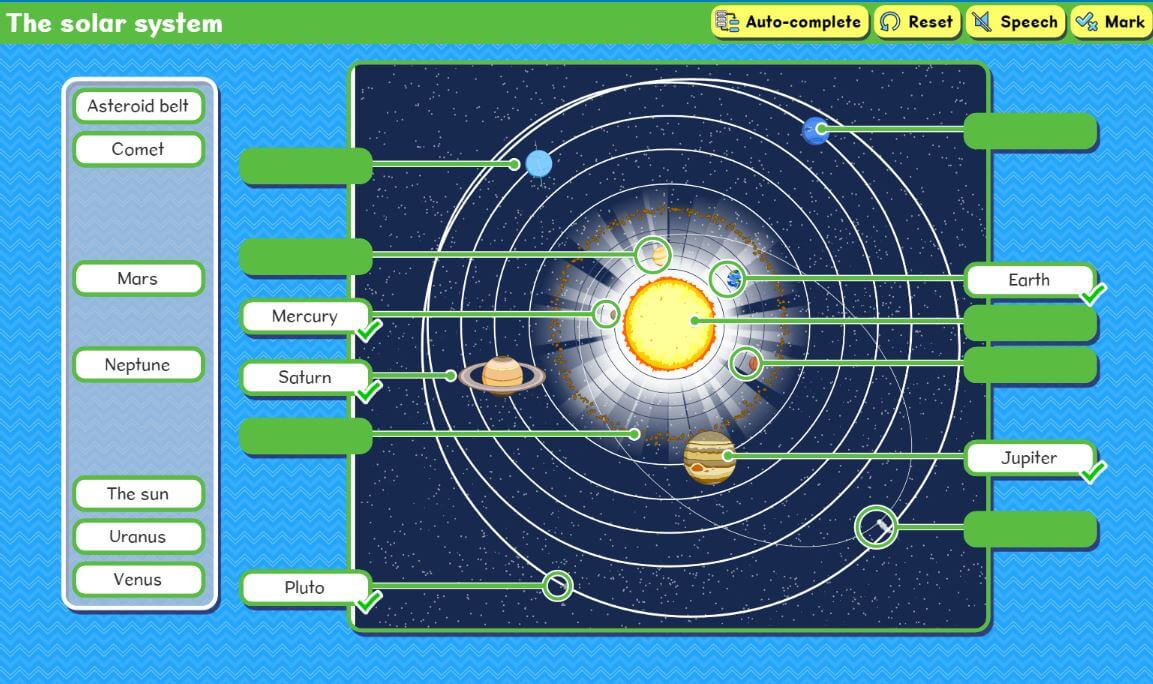
Our free Label the Solar System interactive activity is a simple way to consolidate learning and see what your pupils remember.
7. Let curiosity lead the way
Perhaps the best thing about space is that there is always another question.
- Why is the universe so big?
- Could humans live on another planet?
- How do we know what’s happening millions of light years away?
Encourage pupils to keep a space question wall throughout the week. Every time someone thinks of a question, add it to the wall.
Some questions might be answered through research. Others might lead to discussion or investigation. And some might remain mysteries.
That’s part of what makes space such an exciting topic to explore.
Ready to explore space with your class?
If you’re looking for ready-to-use resources for World Space Week, we’ve created a FREE Space topical pack for primary schools.
It includes:
- KS1 and KS2 lesson plans focused on the planets
- A planet fact-matching activity
- A Solar System modelling activity
- A Space Mission Firsts fact sheet
- A planned space missions fact sheet
- Links to interactive Busy Things space activities
Download your FREE Space topical pack here!
NOTE: If your school subscribes to Busy Things or you’re currently taking a trial, you’ll be able to access the Space Topical Pack by typing ‘space’ into the Search tool on the welcome page.
Want to explore even more?
Space is just one of the topics covered by Busy Things. With over 1,600 curriculum-linked games, activities and tools covering science, maths, English, history, geography, coding, music and art, there’s plenty for curious primary pupils to explore.
Not a subscriber? Try Busy Things free for 28 days and discover what your pupils can do.
This blog post was reviewed and updated in August 2026.