KS1 maths activities: 11 ways to build confidence in number skills
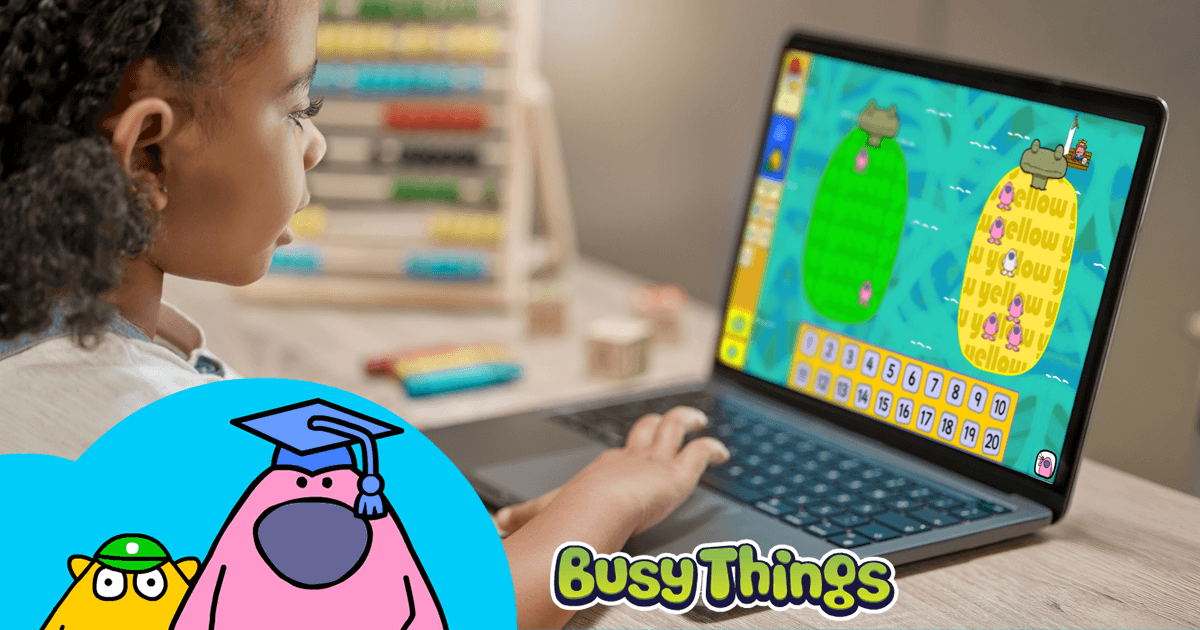
Developing confidence with numbers is one of the most important parts of early maths learning. In Key Stage 1, children begin building the foundations they will use throughout their education, from counting and place value to simple calculations and problem-solving.
For many children, confidence grows through regular practice, visual support and opportunities to explore maths in engaging ways. Digital maths games can play a valuable role in this by providing interactive, low-pressure opportunities for children to explore key concepts, work independently and enjoy learning through play.
In this blog post, we guide you through 11 Key Stage 1 maths resources that link to the KS1 maths curriculum and develop children’s confidence in their number skills.
Why confidence matters in KS1 maths
Confidence has a huge impact on how children approach maths. When pupils feel secure with early number concepts, they are more likely to:
- participate in maths-related discussions
- attempt challenges independently
- explain their thinking
- persevere when the maths becomes more difficult
Children who lack confidence on the other hand may try to avoid maths tasks altogether, and when they do tackle them, rely heavily on adult support or become anxious about making mistakes.
Providing regular opportunities for pupils to succeed through engaging, accessible exercises helps children develop a positive attitude towards maths from an early age.
What are the number skills within the KS1 curriculum?
The Key Stage 1 maths curriculum focuses heavily on developing strong number sense and fluency. Children are expected to:
- Count forwards and backwards
- Recognise numbers and quantities
- Subitise small amounts
- Count in multiples
- Understand one more and one less
- Know the number bonds to 20
- Understand place value
- Add and subtract
- Compare and order numbers
- Solve practical maths problems
- Develop number fluency
These early number skills provide a solid foundation on which to build later in education.
11 Key Stage 1 maths activities to build confidence in number skills
These interactive KS1 maths activities are designed to strengthen number sense, improve fluency and help children feel more confident when working with numbers.
Counting forwards and backwards
Counting forwards and backwards helps children develop number sequencing skills and become more flexible and confident when working with numbers.
Children should be encouraged to:
- fill missing numbers
- continue number patterns
- count forwards and backwards from different starting points
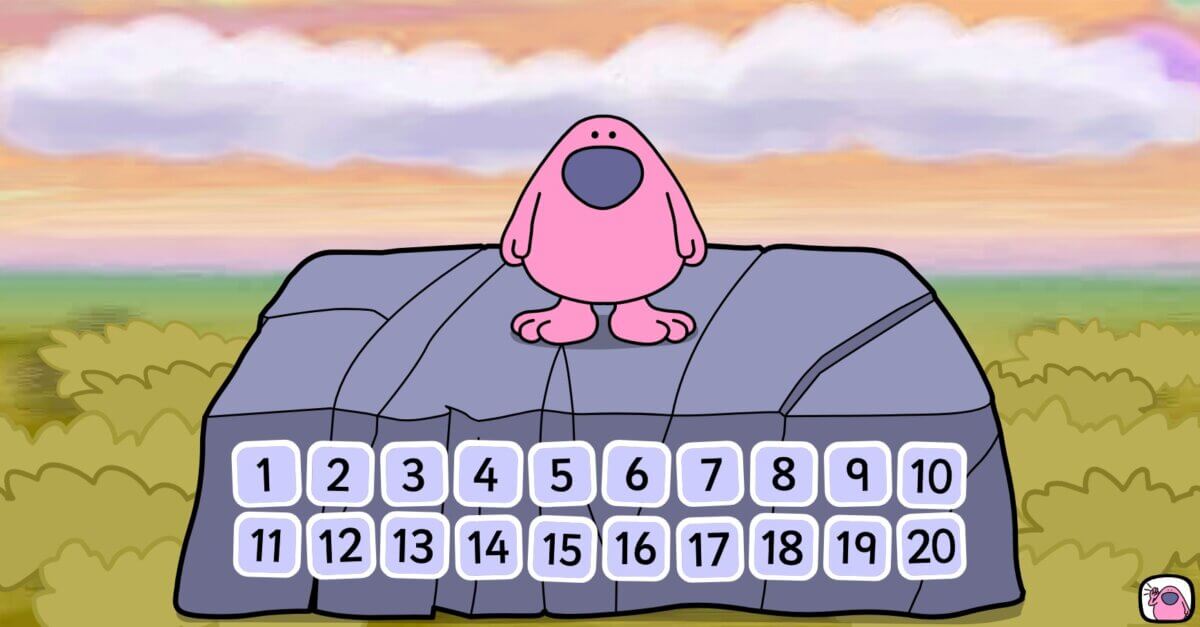
Busy Things’ Action time is a great starter activity for this area.
Children count the actions completed by the pink character before selecting the correct number on the number line.
Recognising numbers and quantities
Recognising numbers and quantities is an important early maths skill that helps children connect numerals with real amounts.
Interactive counting activities help children:
- develop one-to-one correspondence
- recognise quantities visually
- build confidence through repetition and immediate feedback
Hungry chicks supports this area of learning through playful counting practice.
Pupils help the chicken feed the hungry chicks by collecting worms and hopping between clouds to reach the nest. Children need to work as quickly as possible to stop the chicks going hungry.
Subitising
Subitising is the ability to recognise small quantities instantly without counting. It is an important early maths skill that supports number fluency and mental maths, enabling children to:
- spot patterns quickly
- develop rapid number recognition
- build confidence with early number relationships
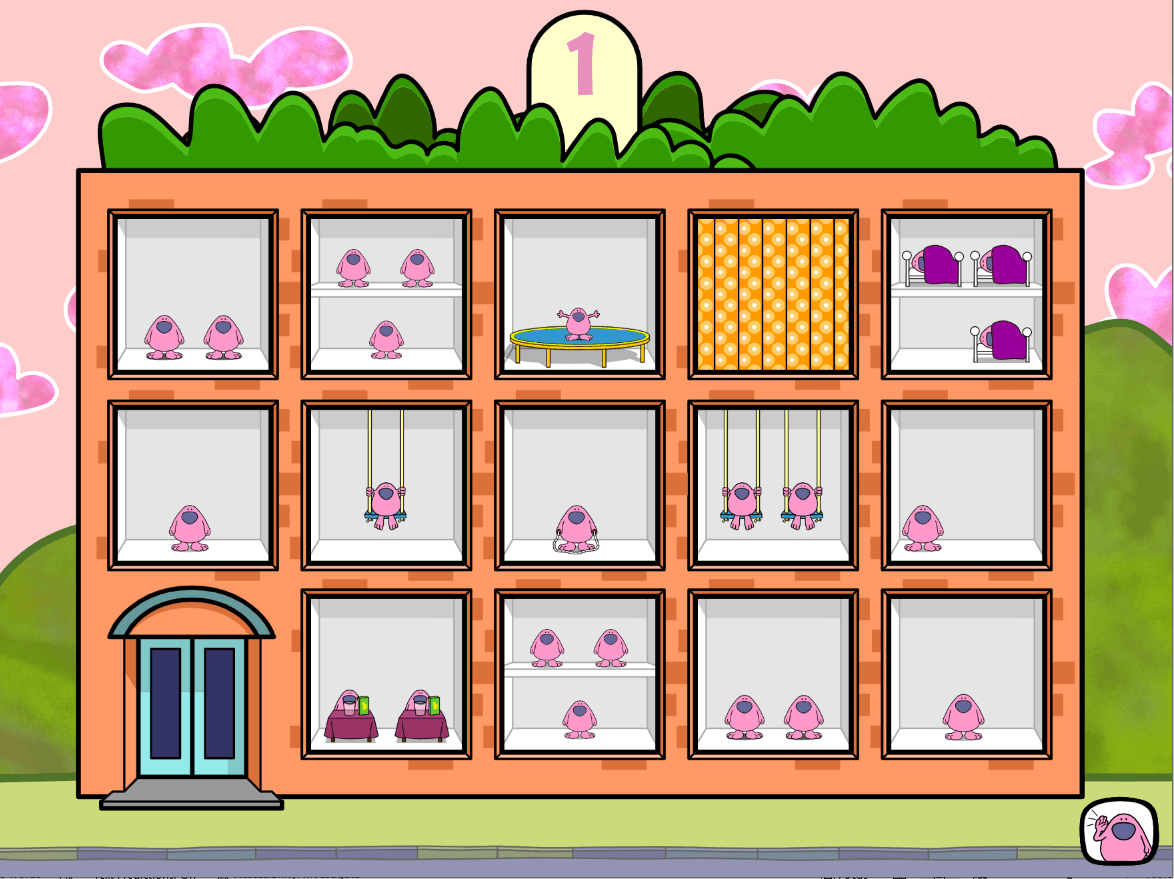
Quantity street on Busy Things is a fantastic subitising activity.
Children need to listen to the verbal instruction then click on the windows showing the number of pink men mentioned.
It’s all about recognising the quantities without counting, so speed is key.
Teacher tip
Encourage children to explain how they worked out an answer, even when they answer correctly straight away. Talking through their thinking helps strengthen mathematical understanding and confidence.
Counting in multiples
Counting in 2s, 5s and 10s helps children recognise patterns within the number system and supports multiplication skills later on.
These activities help children:
- identify number patterns
- improve recall
- strengthen fluency
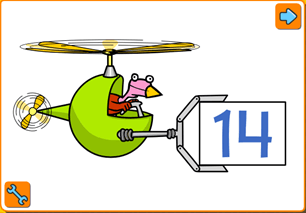
Busy Things has a whole series of teacher-led flashcards to support these skills. They range from counting in 2s right through to counting in 1,000s.
The image on the right is of the Counting even numbers activity.
Identifying one more and one less
Understanding one more and one less is a key stepping stone towards addition and subtraction, allowing children to:
- manipulate numbers visually
- explore number lines
- spot changes in quantity
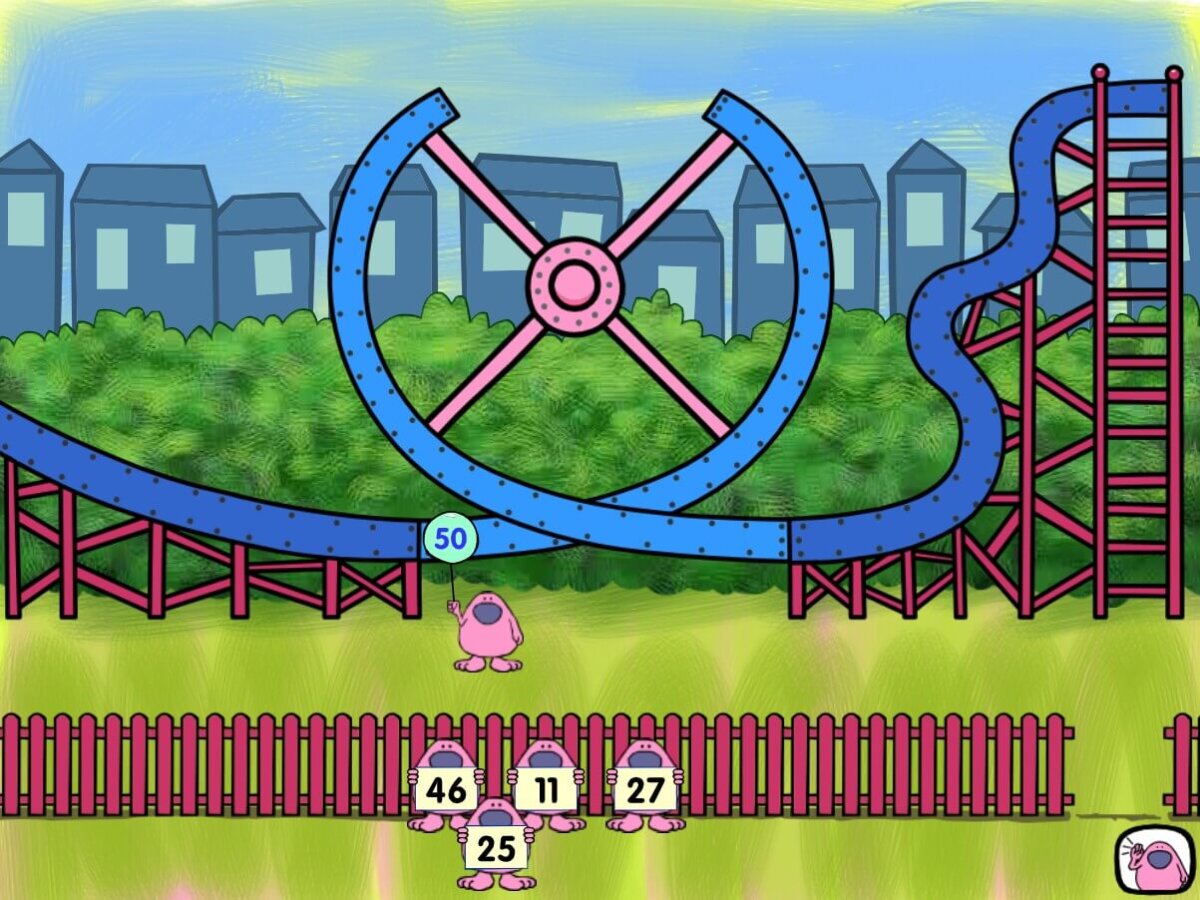
Busy Things’ Rollercoaster – more or less activity helps children reinforce these skills and develop confidence in how numbers relate to one another.
Children are asked for a number one more or less than a given number, choosing from the options provided.
Knowing number bonds
Knowing number bonds helps children automatically recall key number facts. Matching games where children add the right number of items on one side to match what’s on the other provide great opportunities for practice in a low-pressure format. They support:
- mental maths fluency
- understanding of number relationships
- confidence with calculations
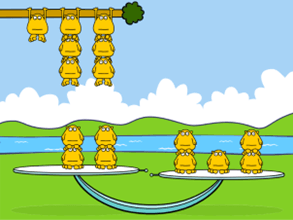
Rocker Shocker is a funny matching game from Busy Things.
Children need to click on the hanging monsters to make them drop or click on the ones on the plate to get them to jump off. Get the right answer for the monsters to get a shock, which luckily they seem to like!
Teacher tip
When introducing number bonds, start with very small number ranges (such as bonds to 5 or 10) and keep the visual layout consistent across activities. Familiarity with the format helps children focus on the number relationships rather than the task structure, which builds confidence more quickly.
Understanding place value
Place value activities at this stage help children understand how numbers are made up of tens and ones.
Visual representations can be really useful here as they make abstract concepts easier to understand. By simplifying the partitioning of numbers, the children can better grasp each digit’s value.
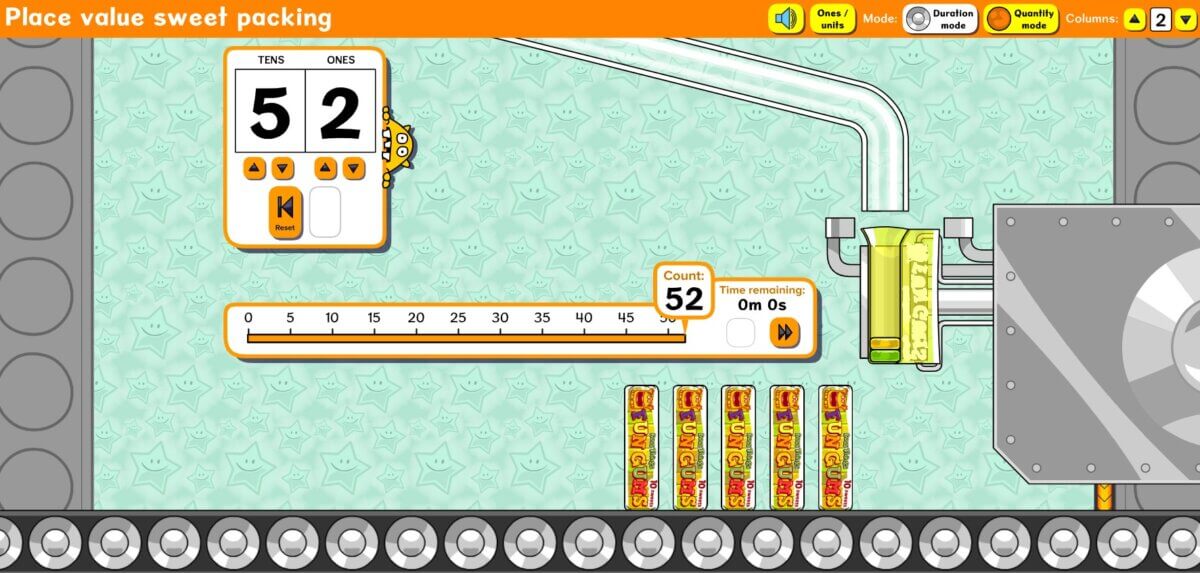
Busy Things’ Place value sweet factory widget is a fantastic tool for experimenting with numbers with a view to understanding place value.
Enter a number using the keypad and see how it’s partitioned. Get an idea of the size of the number by the length of time it takes to pack that many sweets!
Adding and subtracting
Early addition and subtraction activities should focus on understanding rather than speed.
Digital maths games can support this by allowing children to:
- use visual models
- understand that there are sometimes several answers to a question
- practise independently
- revisit concepts as often as needed
This repeated exposure helps build both fluency and confidence.
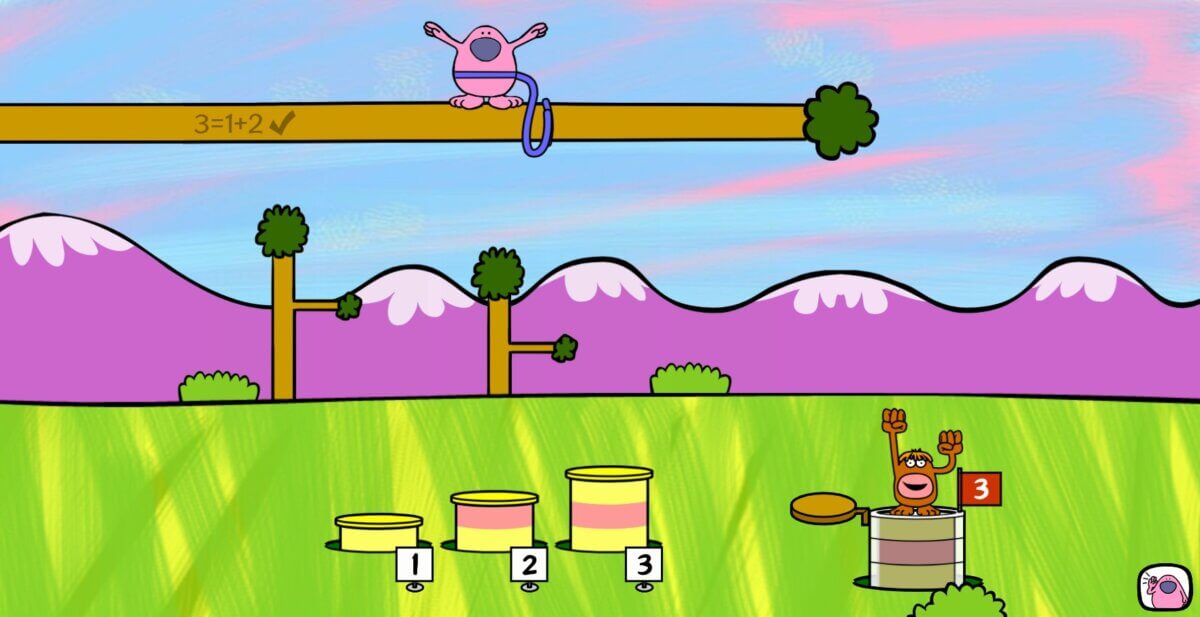
The Number jump activity on Busy Things supports these skills.
Children need to raise or lower the monkey’s platform by the right amount so that he can reach his snack.
Comparing and ordering numbers
Activities that ask children to compare numbers help develop reasoning and number sense.
Ordering exercises can help children practise greater than and less than concepts and sequencing independently while gaining instant feedback on their efforts.
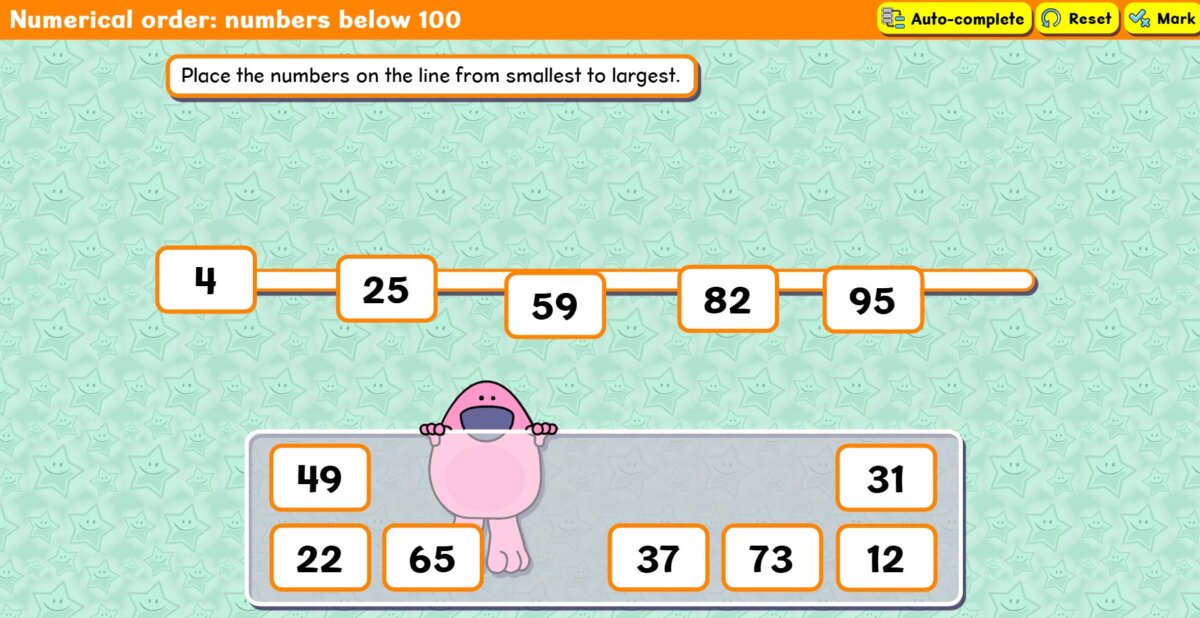
The ‘Numerical order: numbers up to 99’ activity on Busy Things is one of these activities.
It asks children to place numbers on the number line: small numbers on the left and large numbers on the right.
Teacher tip
Using practical resources such as counters, cubes or tens frames alongside digital maths activities can help children visualise abstract number concepts more clearly.
Solving practical maths problems
Practical maths problems help children understand how number skills are used in scenarios outside the classroom.
Activities based around shopping, sharing, measuring or grouping objects help children:
- apply mathematical thinking
- develop reasoning skills
- build confidence in practical contexts
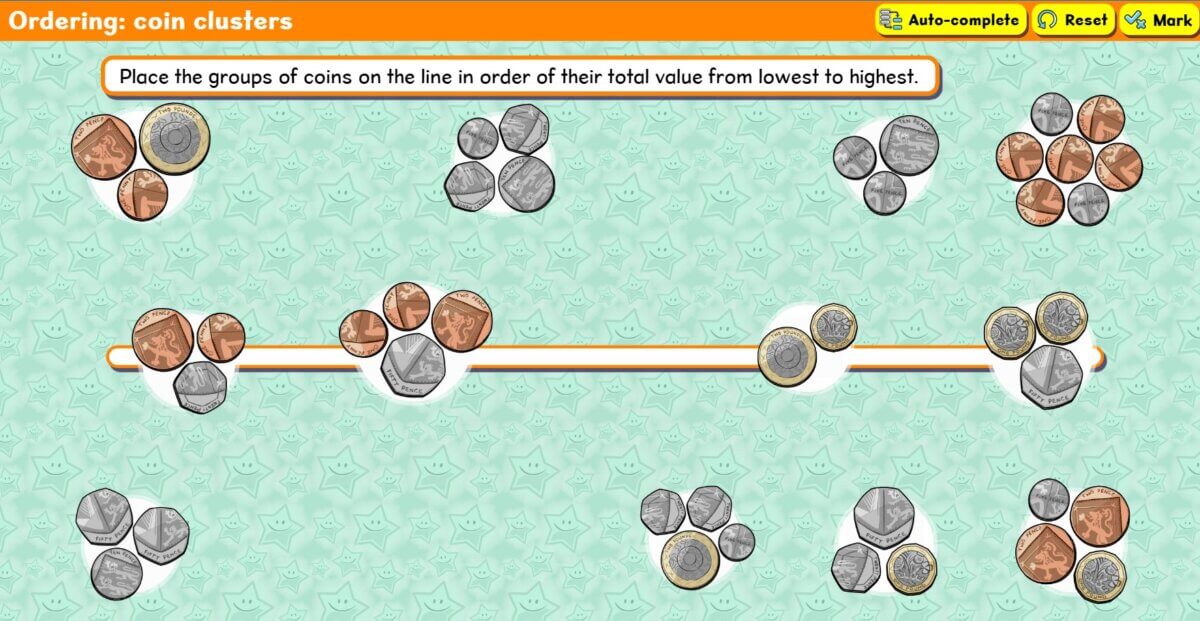
Busy Things ‘Ordering: coin clusters’ activity on Busy Things focuses on money, asking children to quickly calculate the value of a group of coins and to place them on a value line from least value to most.
Developing number fluency
Number fluency develops through regular practice and repeated exposure to key concepts. Dice games are particularly good for this as pupils can add, subtract and compare the numbers given by the dice.
Simple games like these encourage confidence by:
- making maths playful and engaging
- reinforcing mental maths strategies
- being easily repeatable and adaptable
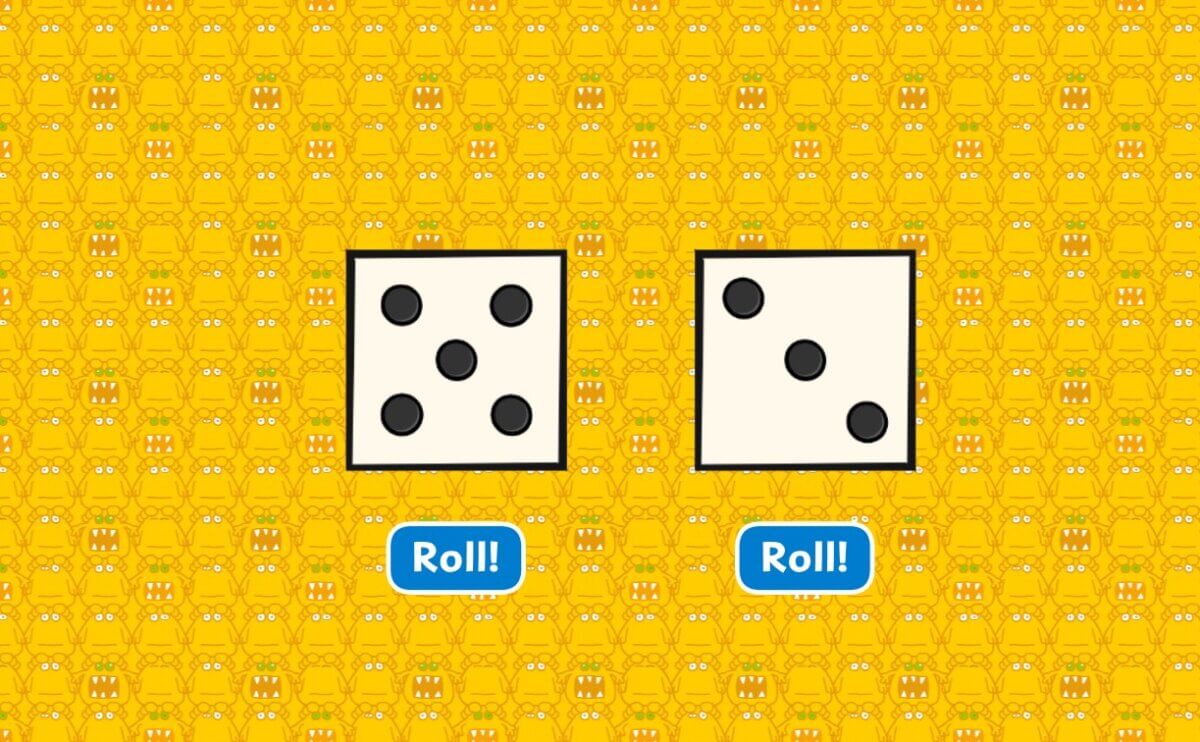
Busy Things ‘Dice’ teacher tool provides you with up to 5 dice at any given time. Just like physical dice, you can roll them and use their numbers in whatever way you want.
Add them together to see who gets the highest. Subtract the smaller number from the larger one. You can even multiply the numbers together.
Teacher tip: Confidence grows when children experience success regularly. Low-pressure maths games and independent practice opportunities can help reluctant learners engage more positively with maths.
The importance of digital and physical hands-on activities
Digital maths activities can be highly effective for building confidence because they provide:
- instant feedback
- opportunities for repetition
- engaging, game-based learning
- independent practice at different levels
However, digital learning works best alongside practical, hands-on experiences.
Using physical resources such as counters, cubes, number lines and tens frames alongside interactive games helps children:
- visualise mathematical concepts
- make connections between concrete and abstract ideas
- deepen understanding through exploration
A balanced approach combining digital and physical activities gives children multiple ways to engage with maths and develop confidence. You could, for example, include Busy Things activities as part of a carousel rotation during maths lessons, with one digital station, one practical station and one teacher-led activity.
Frequently asked questions
- How can I improve confidence in maths in Key Stage 1?
Confidence grows when children experience success regularly. Visual learning, interactive activities, repetition and low-pressure practice opportunities can all help children feel more secure with numbers.
- What are the most important number skills in KS1?
Key number skills include counting, number bonds, place value, comparing numbers, simple calculations and number fluency.
- Why are digital maths activities effective?
Digital activities provide immediate feedback, independent practice opportunities and engaging formats that encourage children to consolidate their learning of key concepts regularly.
- Should digital maths activities replace hands-on learning?
No. Digital activities work best when combined with practical, hands-on maths experiences using physical resources and classroom discussion.
Final thoughts
Building confidence in number skills is one of the most valuable things we can support children with in Key Stage 1. When pupils feel secure with early maths concepts, they are more likely to engage positively with the subject and develop a passion for it.
Through a combination of interactive digital activities, visual learning and practical exploration, children can develop the confidence they need to become successful mathematicians.
Ready to explore these KS1 maths activities and more?
Busy Things includes a wide range of interactive Key Stage 1 maths games and activities designed to help children build confidence in number skills through engaging, curriculum-linked learning.
Explore the full range of KS1 maths activities by taking a free trial.