Ramadan
Ramadan is often a time when pupils notice classmates doing things a little differently and begin to ask thoughtful questions. Exploring Ramadan in the classroom is a valuable way to support religious education, inclusion and understanding, while helping children develop empathy and respect for different beliefs and traditions.
With over 1.9 billion Muslims worldwide, Ramadan is one of the most widely observed religious events and is celebrated by many children and families in UK primary schools.
When is Ramadan?
The Islamic calendar follows the phases of the moon, which means the dates of Ramadan change each year.
This year, Ramadan is expected to begin on the evening of Tuesday 17th February and end on the evening of Wednesday 18th March, although exact dates may vary depending on moon sightings.
What is Ramadan?
Ramadan is the ninth month of the Islamic lunar calendar and one of the holiest months for Muslims.
During Ramadan, many Muslims fast from dawn until sunset. This means they do not eat or drink during daylight hours. A meal is eaten before dawn, called suhoor, and another after sunset, called iftar.
Many children do not fast or may choose to fast for shorter periods with family support. Experiences can vary greatly between families and cultures.
Why do Muslims observe Ramadan
Ramadan is a time for Muslims to grow closer to Allah (God) and reflect on their faith. It commemorates the revelation of the Qur’an, the holy book of Islam, to the Prophet Muhammad.
Fasting during Ramadan helps Muslims practise self-discipline, gratitude and empathy for those in need.
During this month, many people focus on prayer, kindness, charity and trying to give up bad habits. It is also an important time for family and community.
How is Ramadan observed?
Practices can vary across cultures and families, but Ramadan often includes:
- Fasting: Adults and some older children fast during daylight hours.
- Prayers: Muslims spend more time praying, including special evening prayers called Taraweeh.
- Charity: Giving to others, including Zakat (charity), and acts of kindness are strongly encouraged.
- Community and family time: Families and friends often gather to break the fast together at iftar.
At the end of Ramadan, Muslims celebrate Eid al-Fitr, a joyful festival marked by prayers, special meals, new clothes and gifts. It celebrates the end of fasting and thanks Allah for the strength shown during the month.
Why teach pupils about Ramadan?
Teaching about Ramadan supports several important areas of the primary curriculum and school values, including:
- Religious Education
- British Values, including mutual respect and tolerance
- PSHE and citizenship
- SMSC development
- Inclusion and belonging
Learning about Ramadan helps pupils understand different beliefs and traditions, encourages empathy and supports respectful discussion in a diverse classroom.
Questions pupils often ask about Ramadan
Teachers often hear questions such as:
- Why do Muslims fast?
- Can children fast?
- What happens if someone forgets and eats?
- Do all Muslims celebrate Ramadan in the same way?
Providing simple, age-appropriate answers helps pupils build understanding while recognising that experiences can differ between families.
Teaching Ramadan in the classroom
Busy Things has a range of activities that can help you explore Ramadan in an engaging and sensitive way. These activities are:
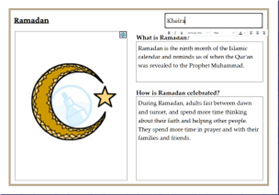
Write about Ramadan – Pupils can explain what Ramadan is, how it is observed and why it is important.
This is great practice for non-fiction writing and discussion in both KS1 and KS2.
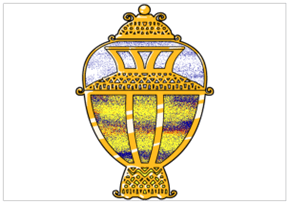
Ramadan lanterns – Choose one of the six lantern templates and decorate it online using colour or pattern.
This supports hand-eye coordination and mouse control while exploring a familiar symbol linked to Ramadan.
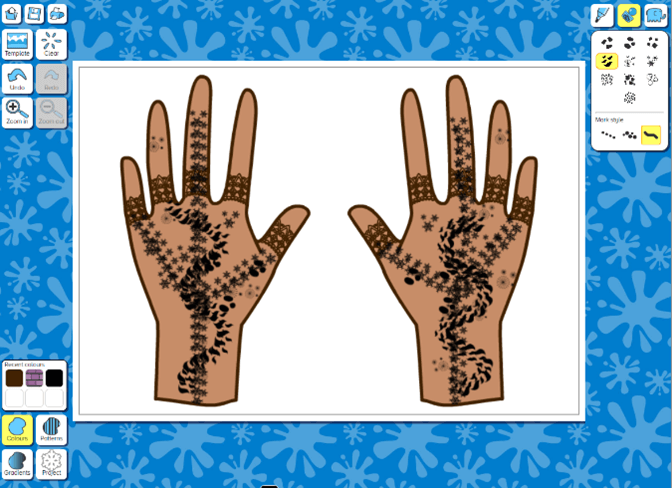
Virtual henna tattoos – Pupils can create their own henna-style designs using templates and design tools. This is a great opportunity to explore symmetry and pattern.
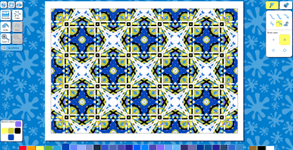
Islamic art activity – Children can explore repeating patterns using five templates inspired by Islamic art.
This activity links well to art, maths and cultural learning.
Celebrating through food
Food is an important part of Ramadan and Eid celebrations and, if any of your class celebrate Ramadan, they will most definitely see and taste Ramadan delicacies first-hand. If appropriate and in line with school policy, you could invite those pupils to talk about foods they enjoy with their families. Equally, you could explore traditional foods through discussion, pictures or research.
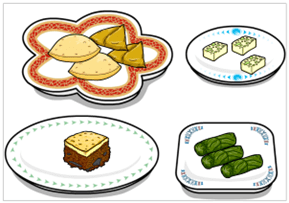
Ramadan Eid al-Fitr – Pupils can design their own Eid al-Fitr feast using our picture project activity.
What dishes would your pupils include and why?
Finding these activities on Busy Things
If you’re trialling Busy Things or are already a subscriber, you can find all these activities by:
- selecting your age group’s profile and clicking on Special Events or
- typing Ramadan into the Search tool.
Not currently using Busy Things?
Feel free to access the Henna tattoos activity earlier in this blog. If you’d like to see more, you’re more than welcome to take out a free 28-day trial with us! Simply click here to do so. If a virtual tour via Teams would be useful, we can arrange that too. Simply contact us here to request one!
As for the unanswered question about forgetting to fast, if you break your fast unintentionally during Ramadan, your fast remains valid. You should simply stop eating when you realise.
Ramadan Mubarak (Happy Ramadan)
This blog was reviewed and updated in January 2026.