Spark your pupils’ curiosity with our new electricity activities
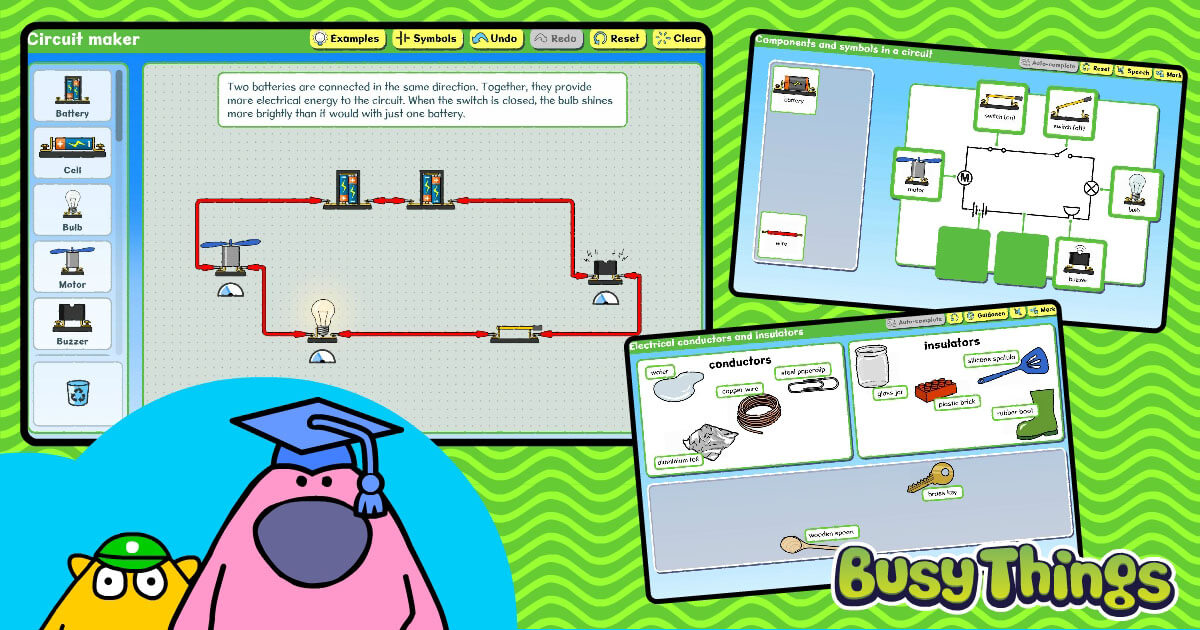
Looking for ways to get your pupils excited about electricity in your Science lessons? Busy Things has six new activities for pupils aged 7–11, designed to help them explore electrical devices, components, circuits, circuit symbols, vocabulary, conductors and insulators.
Whether you’re introducing the topic, reinforcing key learning or checking pupils’ understanding, there’s plenty for your class to explore.
All six activities are available now in the Science area of Busy Things.
1. Electrical and non-electrical devices
Start by looking at the everyday objects around us. Which use electricity and which don’t?
In our sorting activity, Electrical and non-electrical devices, pupils decide whether different devices are electrical or non-electrical, then use the Mark button to check their answers.
It’s a useful way to introduce the topic and find out what pupils already know.
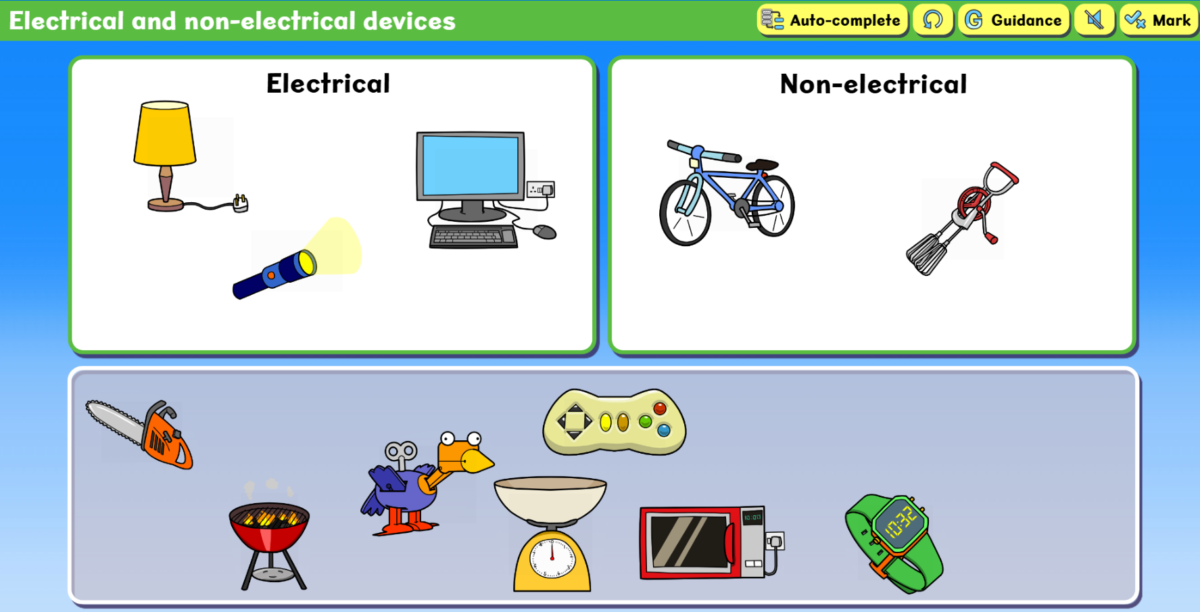
You could extend the activity too by asking children how different devices are powered. Do they use mains electricity, a cell, a battery or something else? Can they think of an electrical alternative to an object that doesn’t usually need electricity?
2. Electrical components
Before pupils start building circuits, they’ll need to recognise the different components and understand what they do.
In our Electrical components activity, pupils drag and drop labels to the correct places to identify the components of a simple circuit.
Once they’ve checked their answers, encourage them to explain the purpose of each component to a partner.
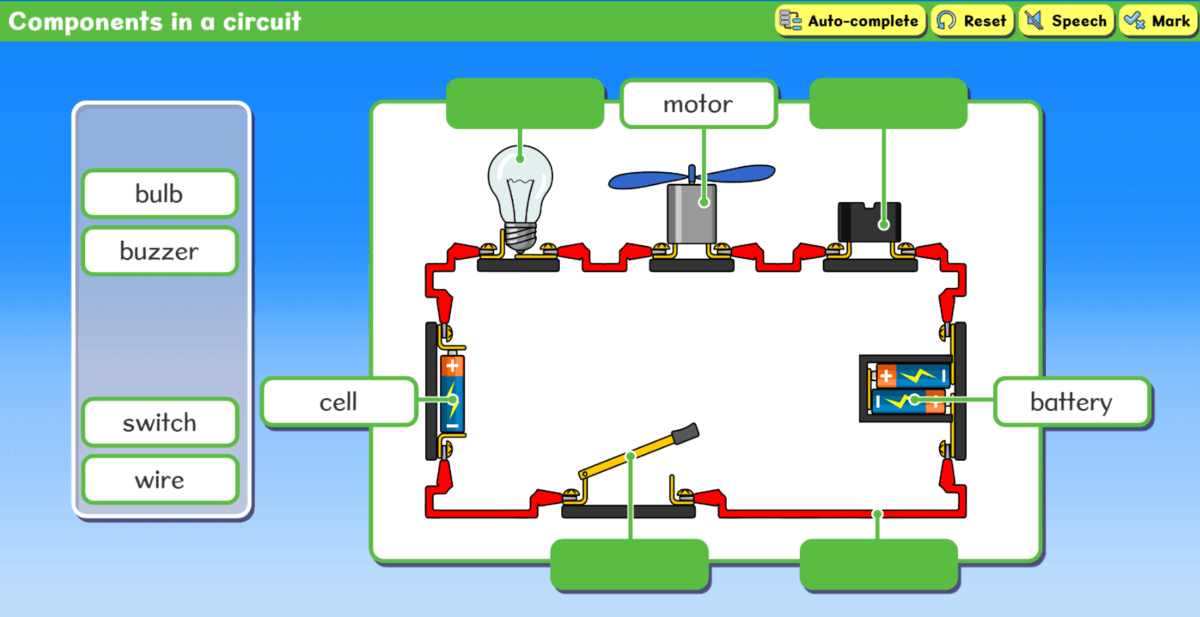
If you have practical equipment available, you could show pupils the real components alongside the activity. Can they identify a cell, wire, switch or lamp? What might happen if one component were removed?
3. Electrical components and symbols
Scientists use standard symbols to represent components in circuit diagrams. This makes it easier to draw, read and communicate how a circuit is connected.
Our Electrical components and symbols activity shows how this works.
Can your pupils match the pictures of electrical components to their corresponding circuit symbols?
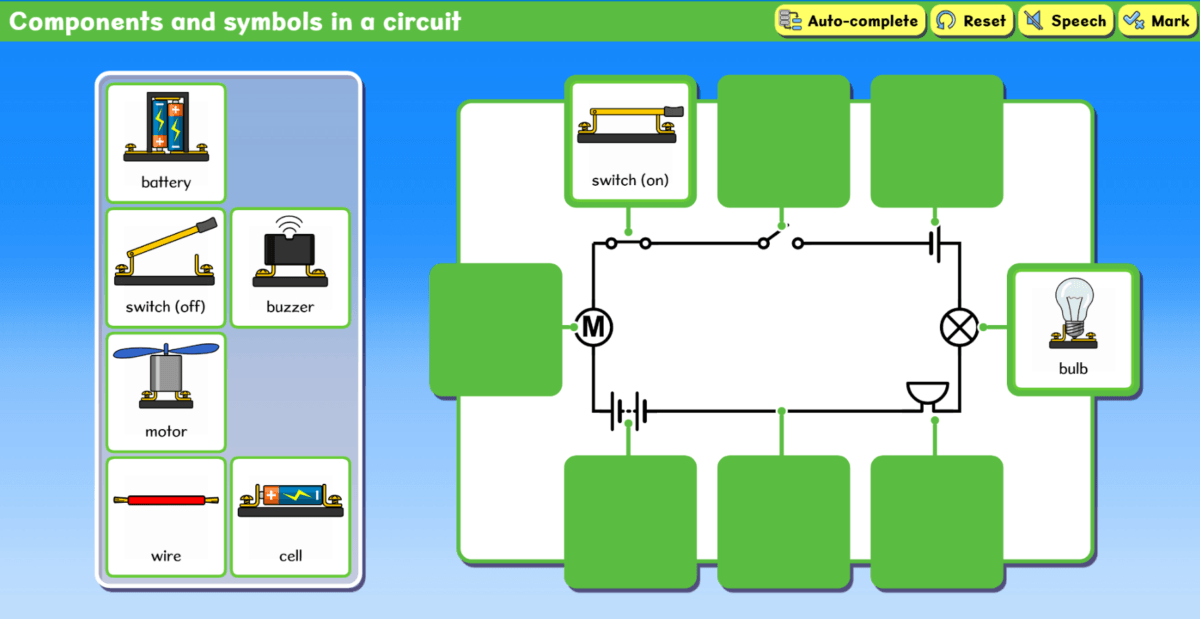
Once they’ve finished, they can use the Mark button to check their work.
Afterwards, ask pupils to copy a few of the symbols into their books and label them. They could also try drawing a simple circuit diagram using the symbols they’ve learnt.
4. Circuits vocabulary
Understanding scientific vocabulary is an important part of learning about electricity. Terms such as circuit, current, conductor and insulator help pupils explain what happens and describe what they’re seeing accurately.
Our Circuits vocabulary activity looks at this, asking pupils to match electrical vocabulary to the correct definitions.
Again, once they’ve finished, they can check their answers using the Mark button.
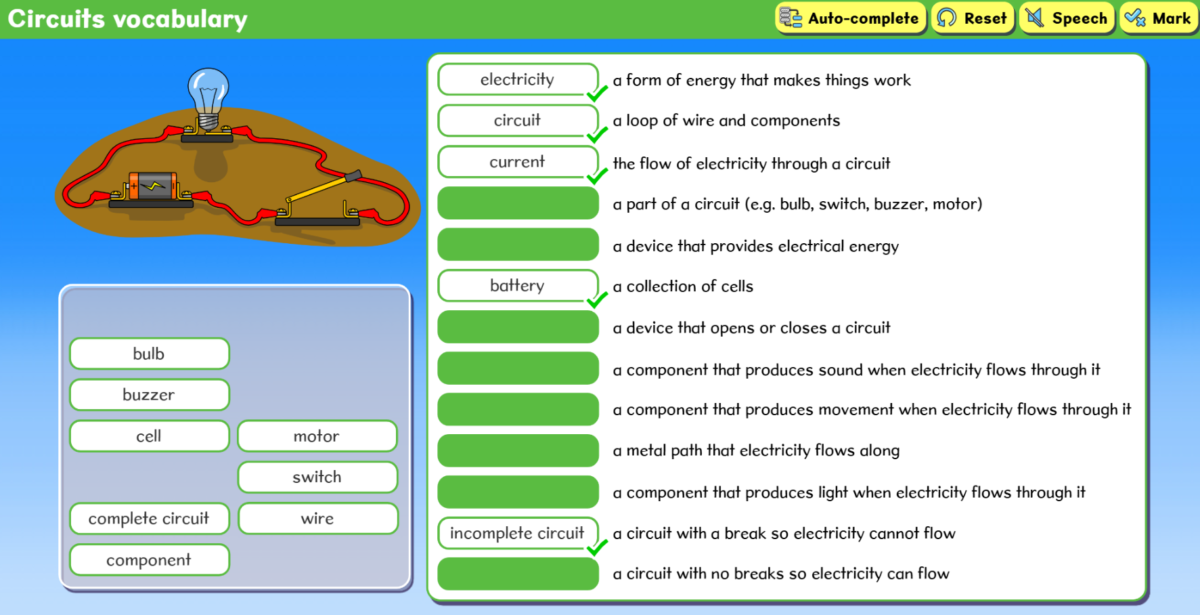
This activity is great to use at the start of the topic to introduce key words or towards the end to check understanding. For an extra challenge, ask pupils to choose two words and explain them to a partner without looking at the screen.
5. Circuit maker
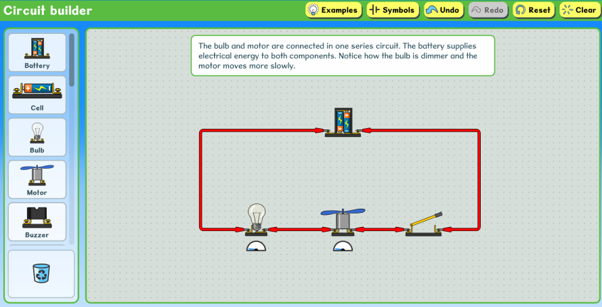
What happens when you connect different components together? Busy Things’ Circuit maker widget allows pupils to experiment with building their own circuits on screen.
They simply drag components onto the board and draw wires between them to connect everything. They can work with pictures of the components or their symbols, disconnect wires and remove components. There are also examples provided to help them get started.
It’s a hands-on way to investigate how a complete circuit works, without worrying about equipment getting lost or broken!
Challenge your pupils to create one working circuit and one incomplete circuit. Can they explain why one works and the other doesn’t? What would they need to change to make the incomplete circuit work?
Also, what happens when you connect more than one component to a power source? Do they all work in the same way?
6. Electrical conductors and insulators
Why are electrical wires often covered in plastic? This activity introduces pupils to the difference between conductors and insulators, helping them understand why different materials are used in electrical devices.
Our Electrical conductors and insulators activity asks pupils to sort materials into the conductor and insulator categories, then use the Mark button to check their answers.
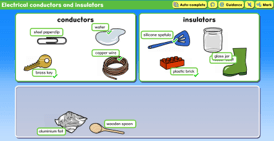
To take their learning further, you could gather a selection of everyday objects made from different materials and ask your pupils to predict which might conduct electricity and which might act as insulators. If you have a simple circuit tester, they could test their predictions and compare their results.
Safety note: Experiments involving electricity should always be carried out under adult supervision. Never test unknown materials using mains electricity.
Explore electricity with Busy Things
From identifying everyday electrical devices to building and investigating circuits, these six new activities can really help your pupils get to grips with how electricity works.
Use them to introduce new ideas, reinforce learning or give pupils the opportunity to practise using important scientific vocabulary. They can also provide a useful starting point for practical investigations and classroom discussions.
You can access the Circuit maker activity free using the link in this blog or find all six activities in the Science area of Busy Things. Simply search for ‘Electricity’ or find them using the Curriculum Browser.
Not a Busy Things subscriber yet? Take a look around with a free 28-day school trial. You’ll have access to these activities, along with more than 1,600 activities and games across the primary curriculum. No payment details required. No obligation to subscribe.