5 ways Busy Things’ A.I. Interviews support children’s learning
How can we help children become better researchers, more confident communicators and more critical thinkers? Giving them opportunities to ask questions, explore different perspectives and investigate what they discover is a good place to start.
Used thoughtfully, A.I. Interviews can help develop research skills in primary schools, giving pupils opportunities to practise asking questions, follow lines of enquiry and evaluate information.
Busy Things’ A.I.-powered Interview activities give 7-11-year-olds the opportunity to have interactive conversations with fascinating people and characters, from William Shakespeare, astronaut Neil Armstrong and surfers fighting against pollution to Second World War evacuees and cocoa farmers in the developing world.
But these activities offer more than an entertaining way to find out facts. By taking the lead in a conversation, pupils can practise asking thoughtful questions, following up on interesting answers and thinking critically about the information they receive.
Here are five ways to use our series of A.I. Interview activities to support children’s learning in your classroom.
1. Develop historical enquiry skills
Learning about historical people and events involves more than remembering dates and important facts. Children also need opportunities to investigate what life was like in the past, understand people’s experiences and consider why events happened.
Our A.I. Interviews can provide an interesting introduction into this kind of historical enquiry.
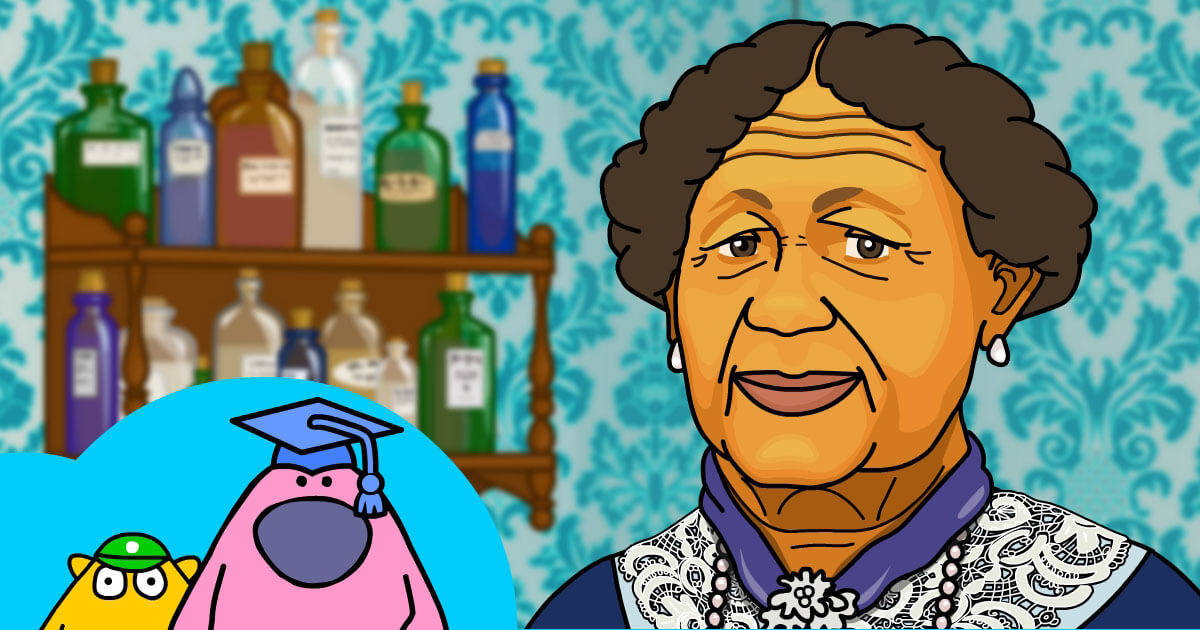
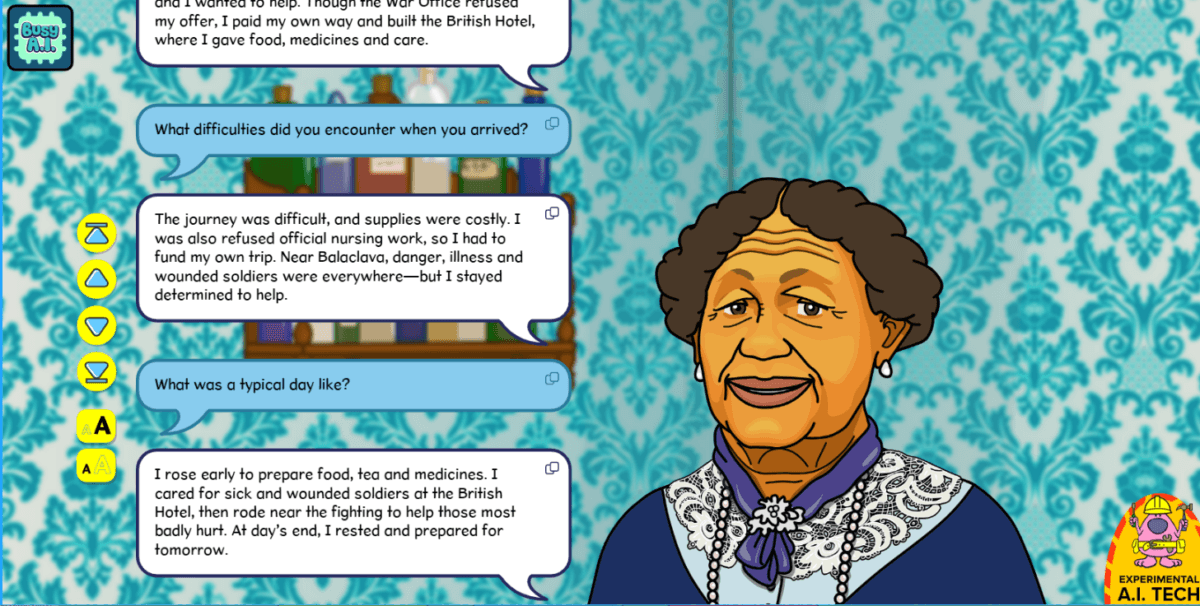
Pupils could interview Mary Seacole, for example, to find out about her work during the Crimean War. Rather than simply asking when and where she lived, encourage them to explore her experiences:
- Why did you decide to travel to the Crimea?
- What difficulties did you face when you arrived?
- What was a typical day like for you?
- How did the soldiers respond to your help?
Pupils could also interview Betty, the character from our Interview an evacuee child activity, to explore what it might have been like to leave home as an evacuee during the Second World War. They could ask about being separated from her family, arriving somewhere unfamiliar and adjusting to a different way of life.
Take learning further: Ask pupils to choose something they discovered during their interview and investigate it using historical books or trusted websites. They could create a fact file, timeline or short piece of historical writing, using their research to build on what they learnt.
2. Explore different perspectives
Understanding the world involves recognising that people can have very different experiences, depending on where they live, their circumstances and the opportunities available to them.
An A.I. Interview can give pupils an opportunity to explore these differences and think about life from another person’s perspective.
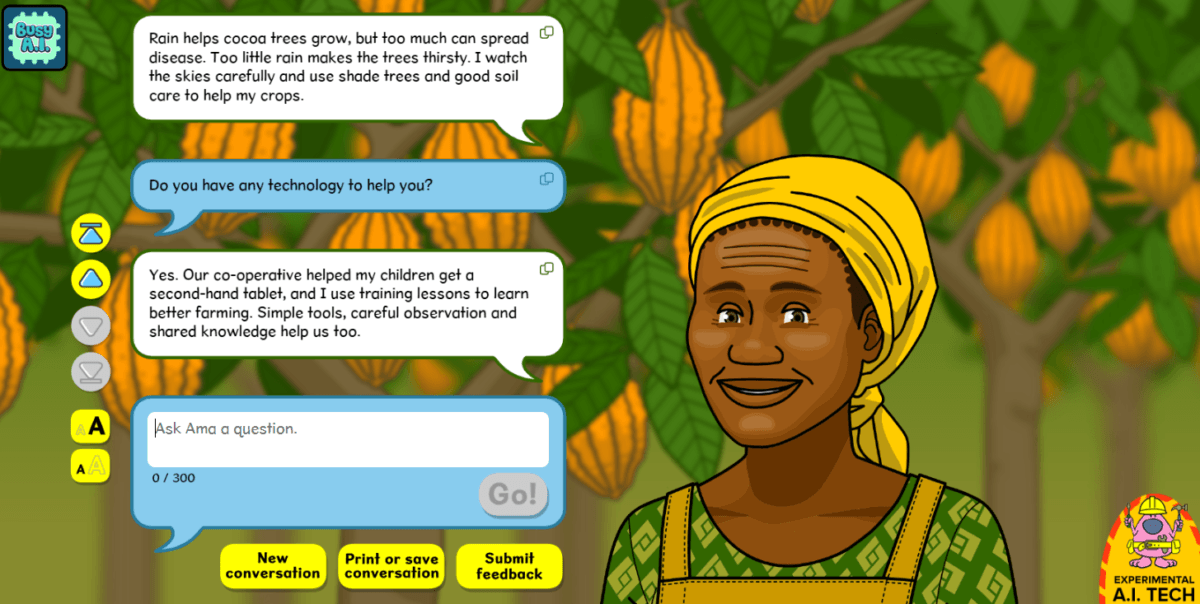
Our Interview a cocoa farmer activity, for example, provides an opportunity to find out about growing cocoa and the people involved in producing chocolate. Pupils could ask about daily life on a cocoa farm, the challenges farmers face, the technology available to them and how their work connects to something familiar in their own lives.
Try questions such as:
- What does a typical day on your farm involve?
- What do you enjoy most about your work?
- What challenges do you face when growing cocoa?
- How does the weather affect your crops?
Take learning further: Ask pupils to compare aspects of life on a cocoa farm with their own experiences. They could investigate where cocoa is grown, how it is turned into chocolate and the journey it makes before reaching the shops. This also provides an opportunity to explore Fairtrade (link to blog) and the importance of fair working conditions.
3. Encourage critical thinking and debate
Good researchers don’t simply collect information. They consider different ideas, look for supporting evidence and think about whether they agree with what they have discovered.
Our A.I. Interviews can help pupils explore these skills by allowing them to investigate a subject through conversation before forming their own opinions.
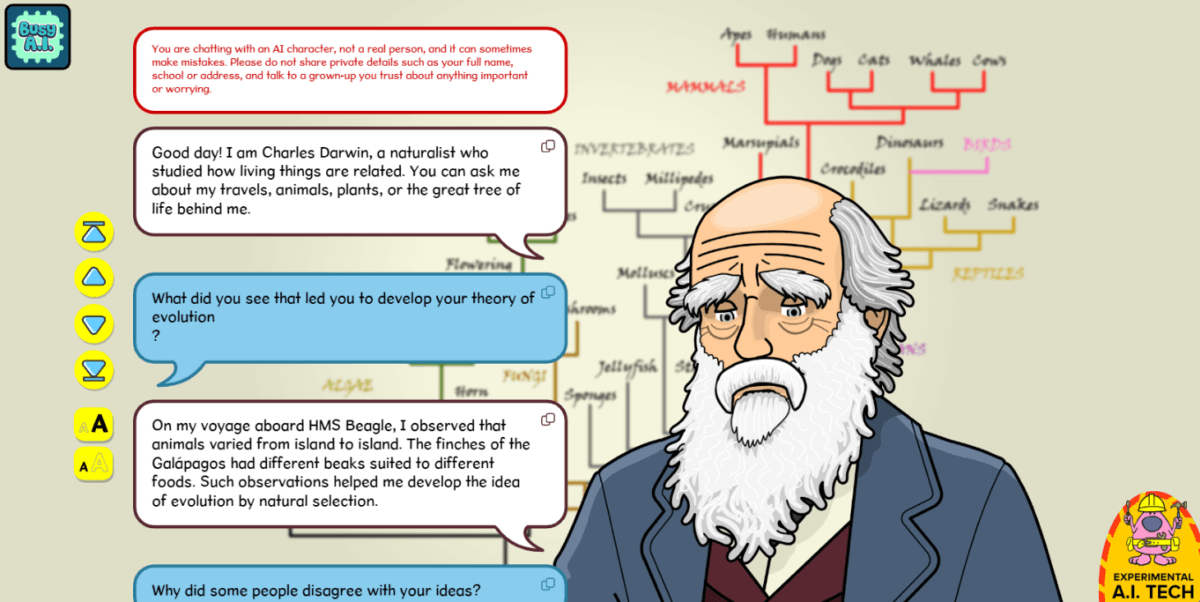
Our Interview Charles Darwin activity is a good example. Pupils could explore his ideas about evolution, ask how he developed his theory and investigate why his work challenged some existing beliefs.
They might ask:
- What did you see that led you to develop your theory of evolution?
- Why did some people disagree with your ideas?
- What evidence supported your thinking?
- How did you respond when people challenged your work?
Take learning further: Use the A.I. Interview to prepare for a class discussion or debate. Pupils could explore why evidence is important when developing scientific theories, for example, or consider how scientific understanding changes when new discoveries are made.
Encourage them to distinguish between what Darwin’s A.I. character tells them, what they can verify through research and what they think for themselves.
4. Practise questioning and communication skills
Knowing how to ask a good question is an important skill, whether children are carrying out research, taking part in a discussion or communicating with others.
A.I. Interviews provide a practical way to put these skills to the test. Pupils aren’t simply answering questions set by their teacher. They are leading a conversation, deciding what they want to find out and responding to the answers they receive.
One way to explore this is to turn pupils into journalists.
Ask them to imagine they are interviewing a famous person for a newspaper, radio programme or television report. They could choose Neil Armstrong, Mary Seacole or William Shakespeare and prepare a series of questions.
Before they begin, model the difference between closed questions, which tend to produce short answers, and open questions, which encourage more detailed responses.
For example:
Closed: Did you perform for Queen Elizabeth I?
Open: How did you feel when you performed for royalty?
Which gave the better response?
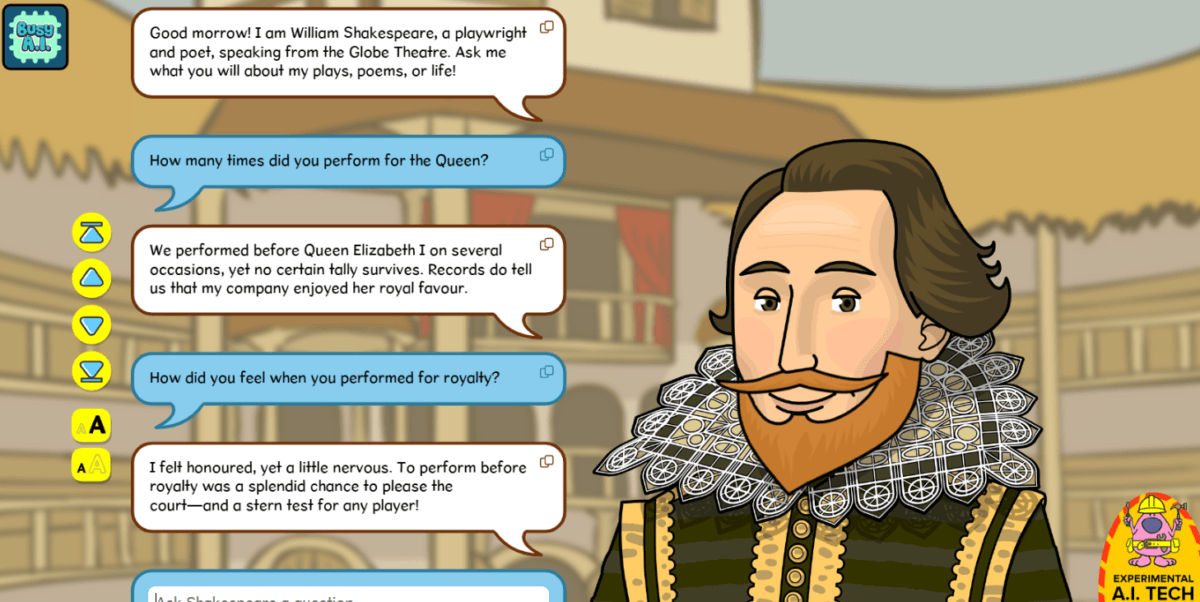
Encourage pupils to think beyond their prepared questions too. If an answer introduces something unexpected or interesting, what could they ask next?
Take learning further: Once the interview is complete, pupils can use their notes to write a newspaper article, prepare a short news report or present their findings to the class. This brings together questioning, listening, note-taking and communication skills.
5. Become a more confident, critical researcher
A.I. can provide quick answers to questions, but that doesn’t mean every answer is necessarily correct. Learning to recognise this is an important part of developing children’s digital literacy.
Busy Things’ A.I. Interviews offer a practical way to introduce the idea that information needs to be questioned and checked, rather than automatically accepted.
Encourage pupils to choose an interesting answer from one of their interviews and investigate whether they can verify it using another source.
For example, after interviewing Neil Armstrong, they could check details about the Apollo 11 mission using a trusted space or science website.
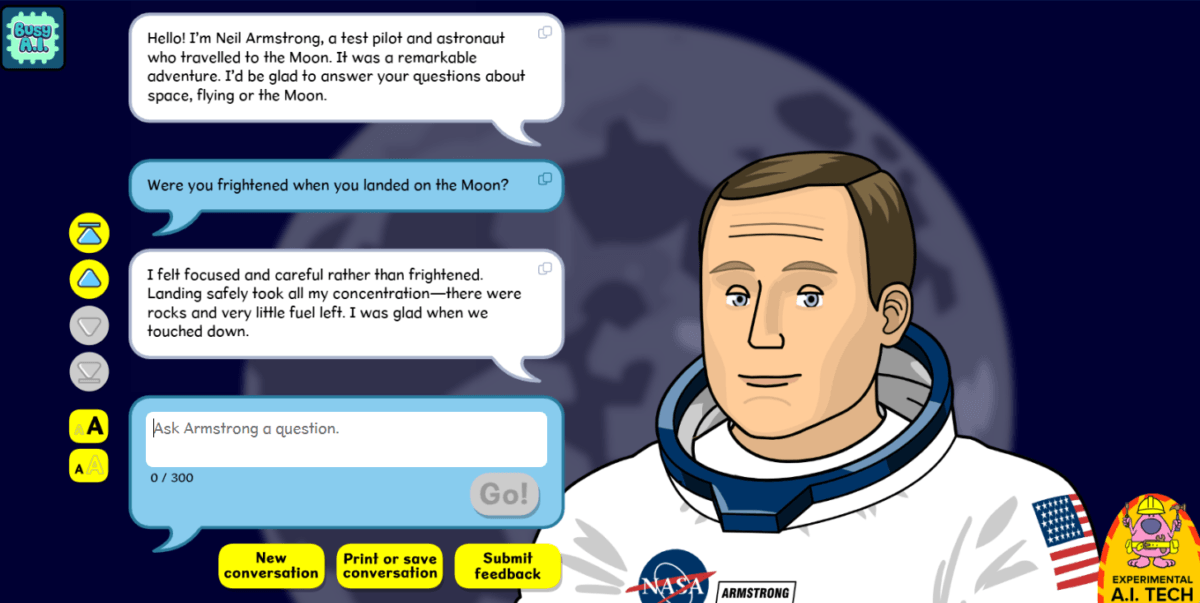
After interviewing Shakespeare, they could look for other sources about his life and works and compare the information.
You could encourage them to think about questions such as:
- Can I find another source that confirms this information?
- Is there any evidence to support this answer?
- Does the answer give me the whole picture?
- Is there anything I still need to find out?
Take learning further: Ask pupils to become A.I. fact-checkers! They could select three statements from an interview and investigate each one. Can they verify all three? Did they discover any additional information? Did anything need correcting or explaining further?
This is a useful way to introduce responsible A.I. use while developing research skills and critical thinking.
Helping children get the most from Busy Things’ A.I. Interviews
As with any classroom resource, a little preparation can help pupils get much more from the experience.
Here are three things worth considering:
Model thoughtful questioning. Younger pupils may initially ask simple questions that produce short answers. Demonstrate how to use open questions, explore a subject in more depth and follow up on something interesting rather than simply moving to the next question on a list.
Make the distinction between A.I. characters and real people clear. Busy Things’ A.I. Interviews allow pupils to interact with A.I.-powered characters based on real or fictional people. They aren’t communicating with the actual historical figures, and the responses aren’t genuine historical testimony. This is particularly important when exploring sensitive subjects or historical experiences. The conversations should be treated as a platform from which to base their learning, not a substitute for primary historical sources.
Encourage pupils to verify important information. A.I.-generated responses can sometimes be inaccurate or incomplete. Encourage children to check important historical and scientific information against reliable sources, helping them understand that a convincing-sounding answer isn’t necessarily a correct one.
Try Busy Things’ A.I. Interviews
From exploring life in the past to investigating scientific discoveries, Busy Things’ A.I. Interviews offer Key Stage 2 pupils an engaging way to practise questioning, communication, research and critical thinking skills.
Why not try one for yourself? It’s the best way to see how the conversations work and will help you think about how you might use them with your class.
You can try our Interview Neil Armstrong activity for free, with no subscription required. Just click the link!
To explore the other activities, including Charles Darwin, Thomas Farriner, Mary Seacole, William Shakespeare, Zeus, a cocoa farmer and an evacuee child, simply start a free, no-obligation trial for your school.