Black History Month: 3 engaging activities for primary schools
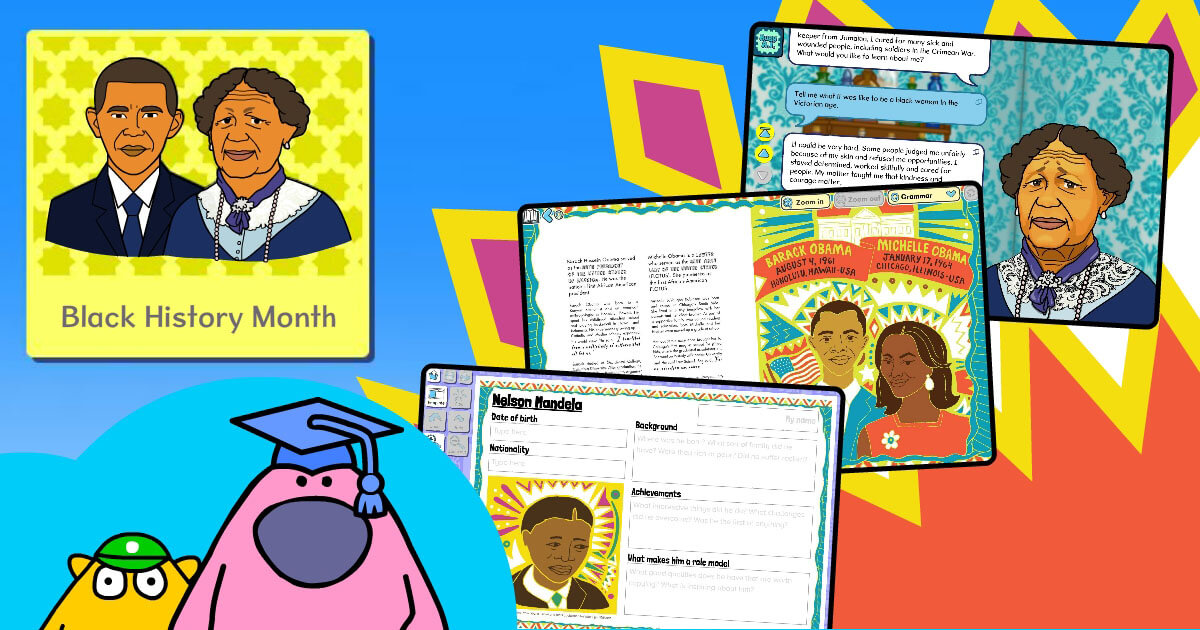
Black History Month is an opportunity to explore the achievements, experiences and contributions of Black people from around the world, both past and present.
For primary pupils, it can be a great opportunity to learn about inspirational individuals, explore their achievements and consider the qualities that helped them make a difference.
To help you bring these themes into the classroom, we’ve cherrypicked three activities from Busy Things that could form the basis of a Black History Month lesson.
1. Explore Barack and Michelle Obama through Young, Gifted and Black
Our extract from Jamia Wilson’s “Young, Gifted and Black” gives pupils the chance to explore the lives and achievements of the former US President Barack Obama and First Lady Michelle Obama. It considers their roots, education and careers.
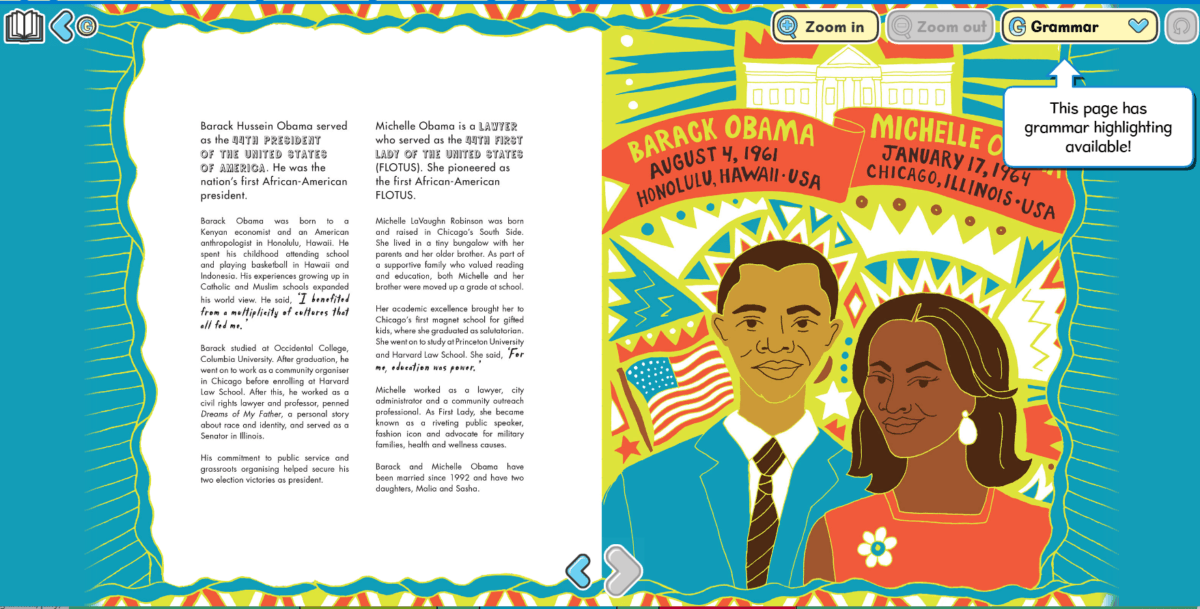
After reading it, test your pupils’ knowledge using our Comprehension quiz. The sections retrieving information from the text and drawing inferences from the text are particularly relevant.
2. Create a Black History Month fact file about someone inspirational
Who inspires your pupils?
Black History Month provides a great opportunity to explore the achievements of inspirational Black people from the past and present.
Jamia Wilson’s book “Young, Gifted and Black” introduces children to 52 Black icons, including Mary Seacole, Harriet Tubman, Barack Obama, Michelle Obama, Katherine Johnson, Serena Williams and Nelson Mandela. Its sequel, “Young, Gifted and Black Too”, introduces a further 52 Black icons, giving children even more inspirational people to discover.
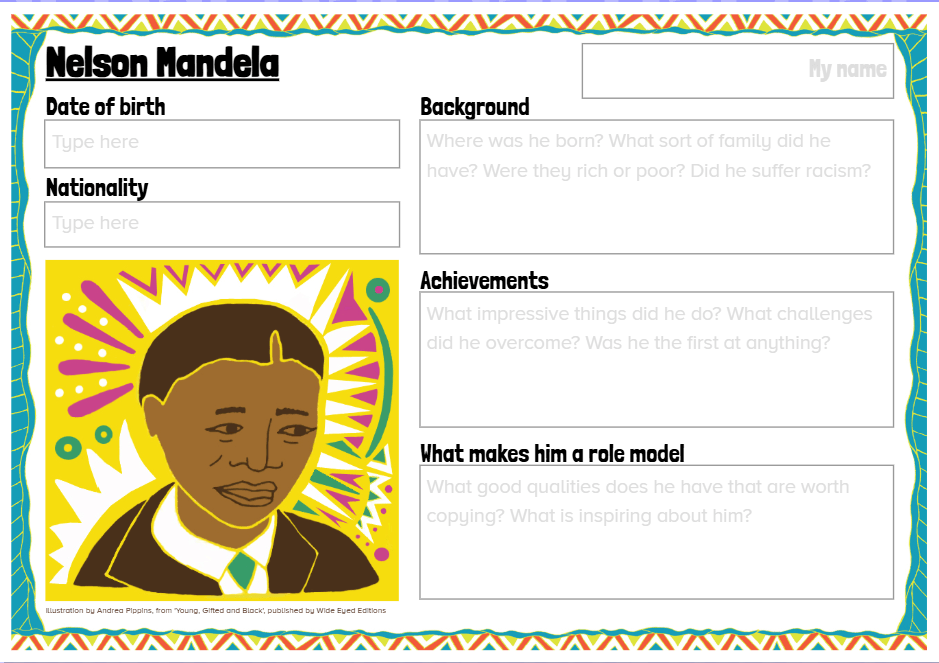
You could ask each pupil to choose someone who inspires them and create a fact file about them using our Black Icon case study. They could choose a Black person from either book, or someone they know personally.
The person doesn’t need to be famous. They could be a family member, a teacher, someone in their local community or a friend who has achieved something they’re proud of.
This can lead to a lovely discussion about what makes someone inspirational. Is it something they have achieved? A challenge they have overcome? The way they help other people? Or simply the way they make a difference to those around them?
Once they’ve chosen their person, pupils can research and record information such as:
- Who are they?
- What are they known for?
- What have they achieved?
- What challenges have they faced?
- What qualities do they have?
- How have they made a difference?
- Why do they inspire you?
This gives pupils the opportunity to practise researching, selecting relevant information and presenting their findings, while also thinking about the qualities they value in other people.
Classroom idea: Create a class display of your pupils’ inspirational people. You could include famous Black icons alongside people from your pupils’ own lives, showing that inspiration can come from many different places.
3. Interview Mary Seacole
Mary Seacole was a pioneering Jamaican-born nurse who overcame racial prejudice to care for wounded British soldiers during the Crimean War. Our Interview Mary Seacole activity gives pupils the opportunity to ask her their own questions and find out more about her life and experiences.
Using A.I., pupils can ask Mary Seacole their own questions and receive answers in character, based on her life, experiences and historical context.
Rather than giving children a fixed list of questions, the activity allows them to ask questions they’re really interested in.
This could be:
- Why did you want to become a nurse?
- What challenges did you face?
- How did you help wounded soldiers?
- What was your life like during the Crimean War?
- What are you most proud of?
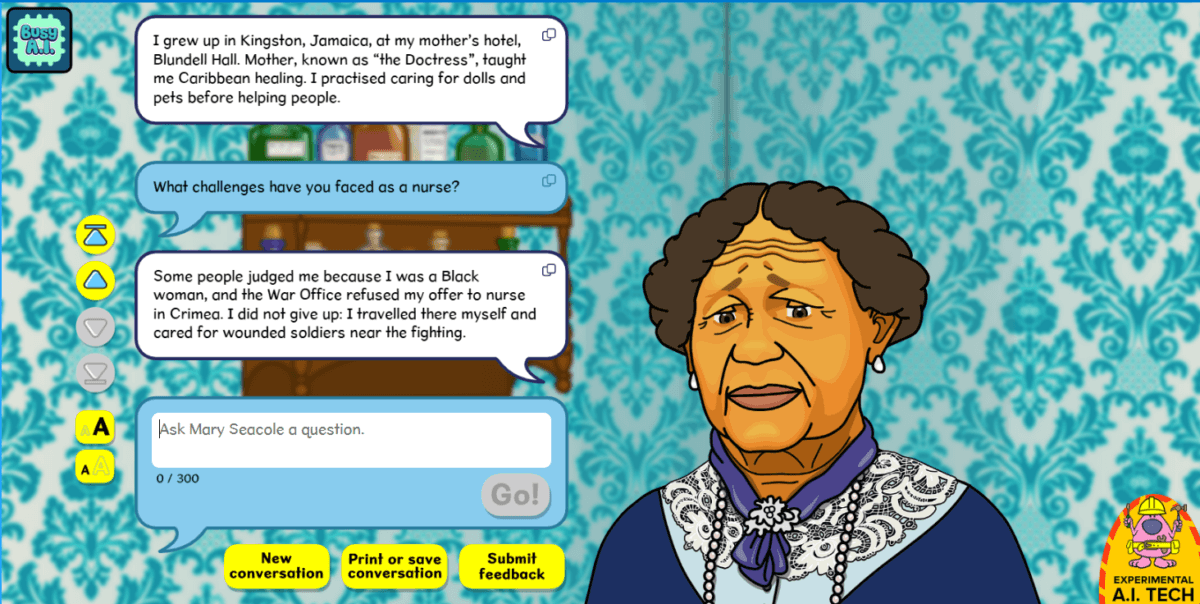
You could begin by asking pupils to write down three questions they would like to ask Mary Seacole. After using the interview, they can compare their questions with the answers they received and identify anything that surprised them or prompted another question.
This makes a particularly good introduction to historical enquiry, encouraging pupils to think beyond simply finding and remembering facts.
As with any A.I. activity, we recommend teachers try the interview themselves before using it with pupils.
Make Black History Month a starting point for wider learning
Black History Month doesn’t have to be limited to one lesson or one week.
The people pupils encounter through these activities can provide starting points for further learning across the curriculum. You could explore geography through the places people lived and travelled, history through the periods they experienced, science through the discoveries of Black scientists, or English through biographies, speeches and creative writing.
Most importantly, exploring the achievements and experiences of Black people can help children develop a broader understanding of the world and discover stories they may not have encountered before.
Black History Month could just be the start
If you’ve enjoyed the extract and ideas included in this blog post, you might be interested in seeing more of Busy Things’ 1,600 engaging, curriculum-linked activities.
The best way to do this is to take a free trial. This gives you 28 days to explore all of our activities and teacher tools. You can also share your login details with your colleagues, so they can explore Busy Things too.
One Reply to “Black History Month: 3 engaging activities for primary schools”